
Field notes from the acerola growers we work with in Brazil
Field visit · Brazil
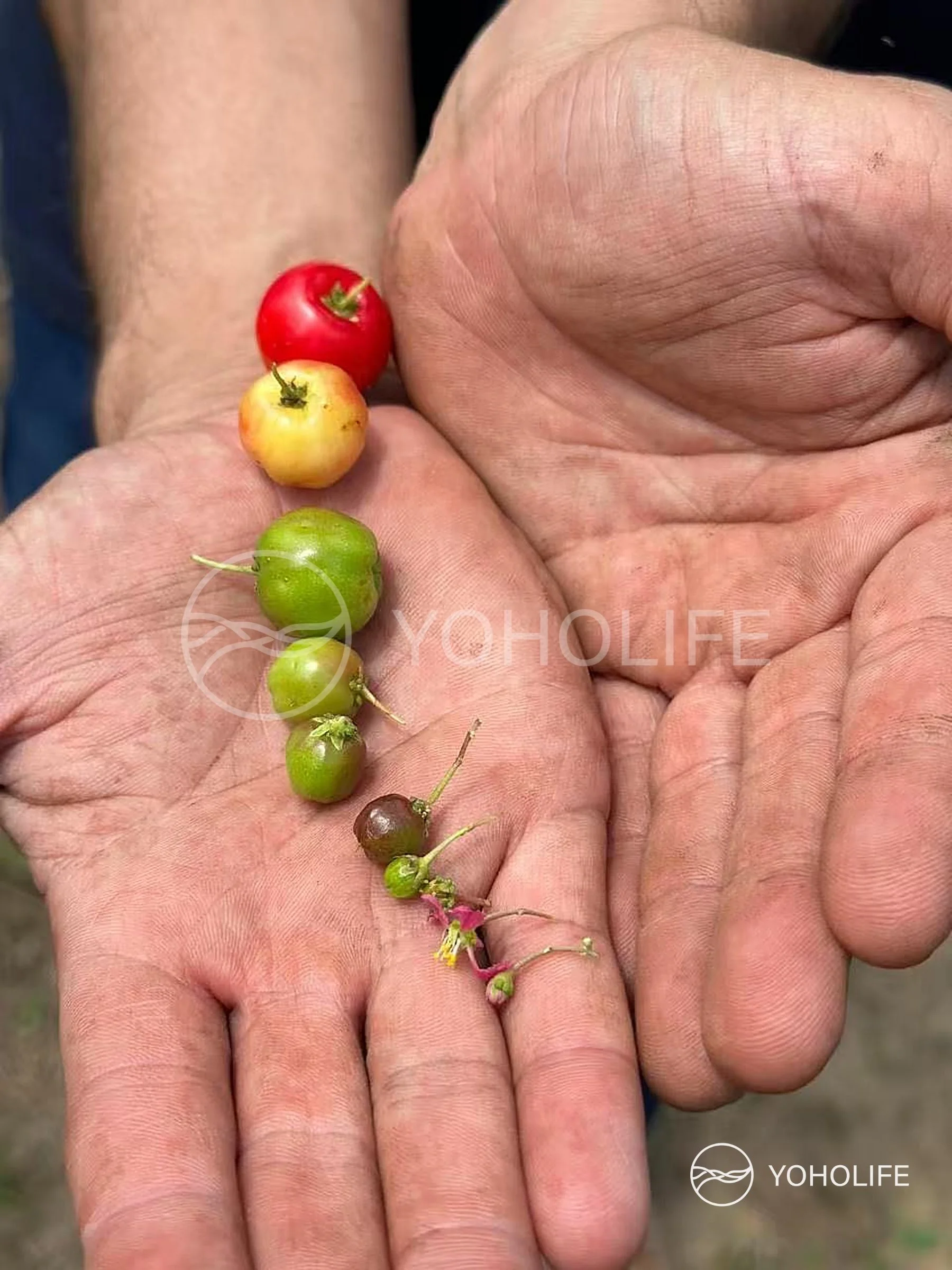
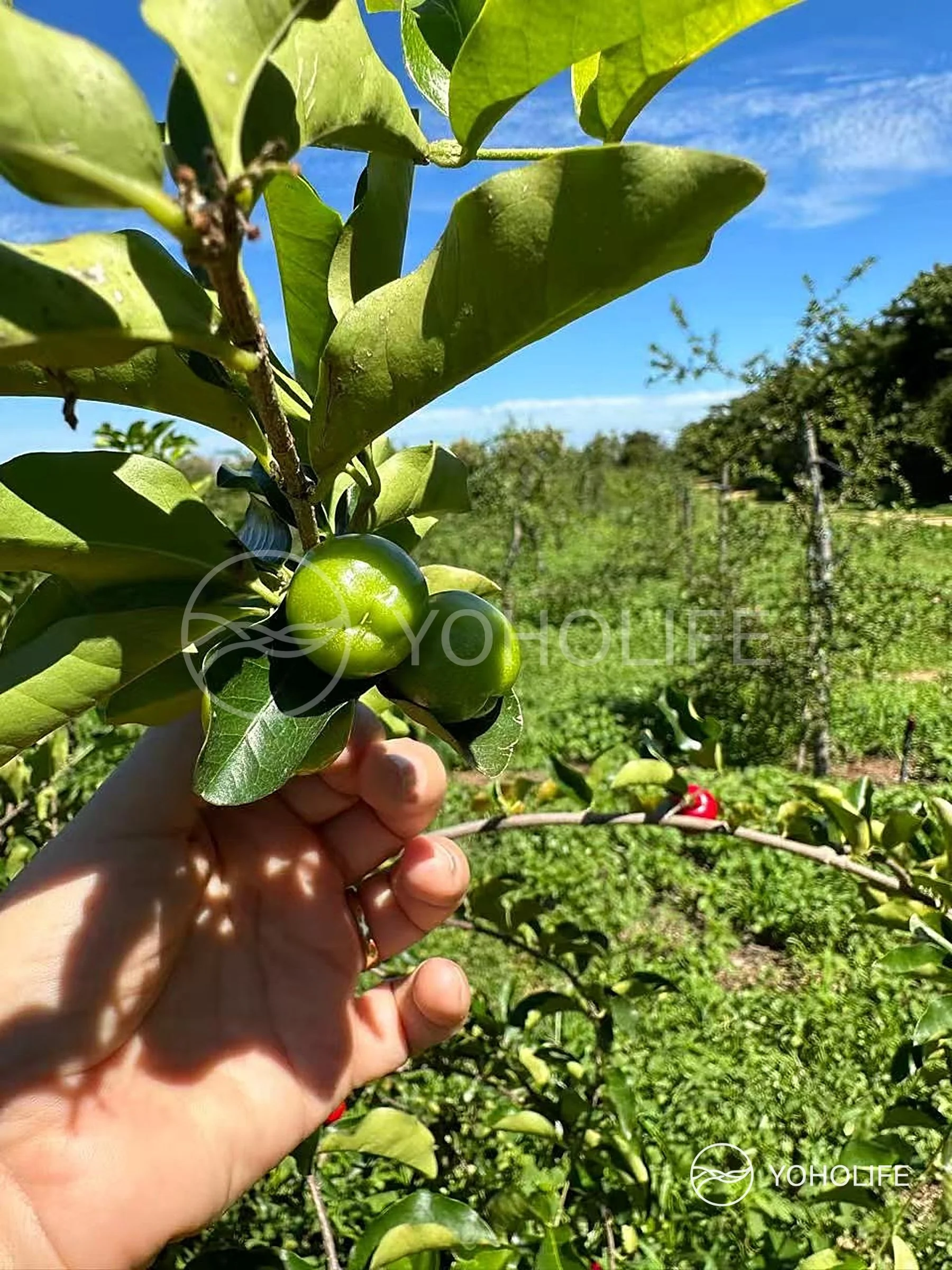
On one branch, a flower, a green fruit and a red one: acerola keeps several seasons at once.
On a visit to the acerola growers we work with in Brazil, the YOHOLIFE® team walked through orchards, a shaded nursery and rows of young trees. We came to see a fruit that is valued for one compound above all—vitamin C—and to understand how much the plant, the timing of the harvest and the care after picking decide what that figure becomes.
Acerola is small, soft and quick to spoil. Between the blossom and the processing plant there are only a few weeks, and the fruit’s composition changes along the way. That makes the work in the orchard part of the specification, not just a backdrop to it.
Our cooperation with local growers keeps us close to that work. Returning to the source helps us connect a familiar ingredient to the people, plants and decisions behind it.
01 / THE PLANT
A small tree that found a second home in Brazil
Acerola, Malpighia emarginata DC., belongs to the Malpighiaceae. It is native to the region from Mexico to northern South America and naturalised in the Caribbean; in English it is also known as Barbados cherry or West Indian cherry, and older literature often calls it M. glabra or M. punicifolia.1 It grows as a shrub of about two and a half to three metres.2
Brazil met the plant in the mid-1950s, when a professor at the Federal Rural University of Pernambuco introduced it from seed bought in Puerto Rico.3 Today Brazil is the world’s largest producer of acerola.4
02 / FROM BLOSSOM TO FRUIT
A few weeks from flower to harvest
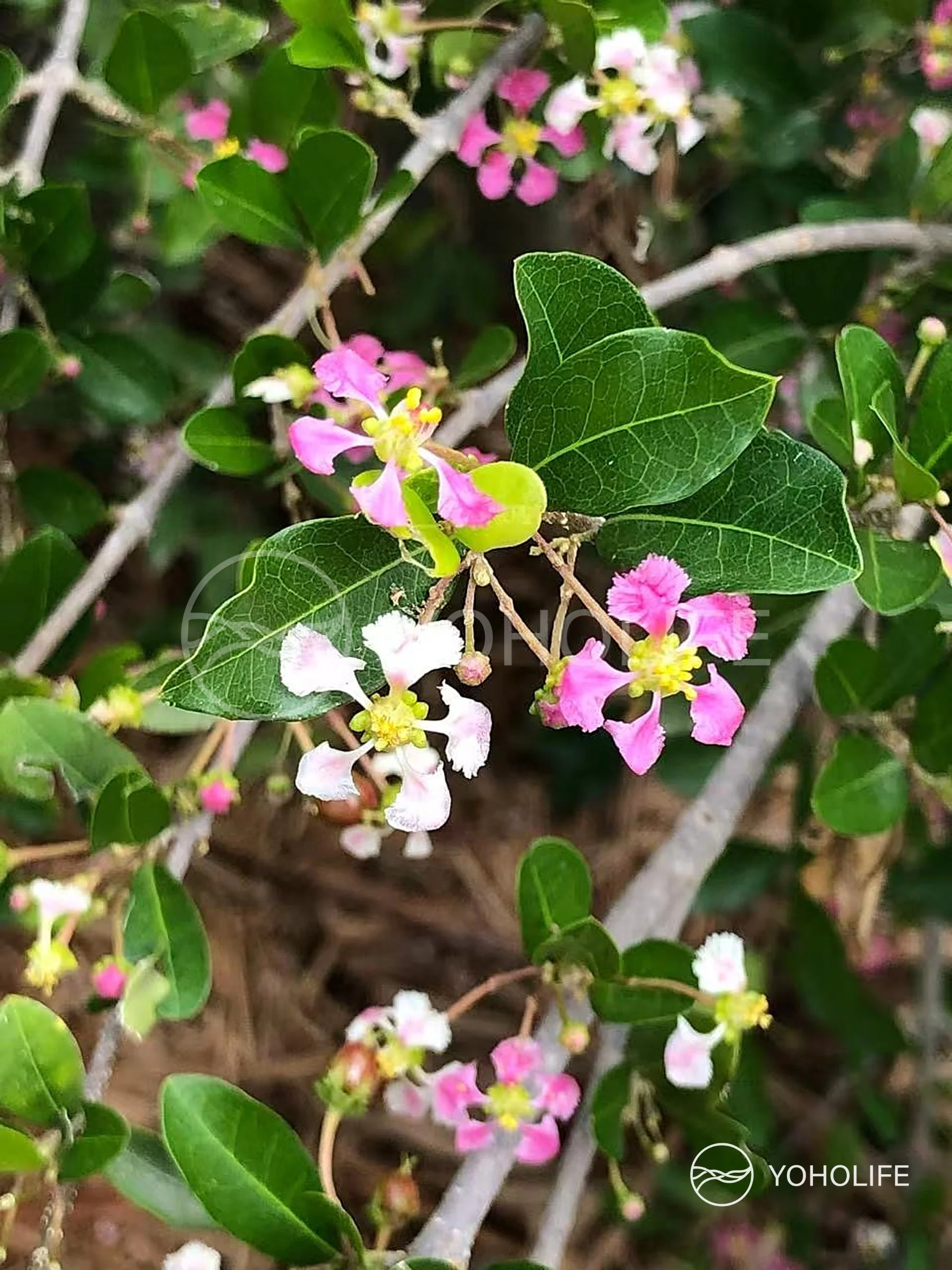
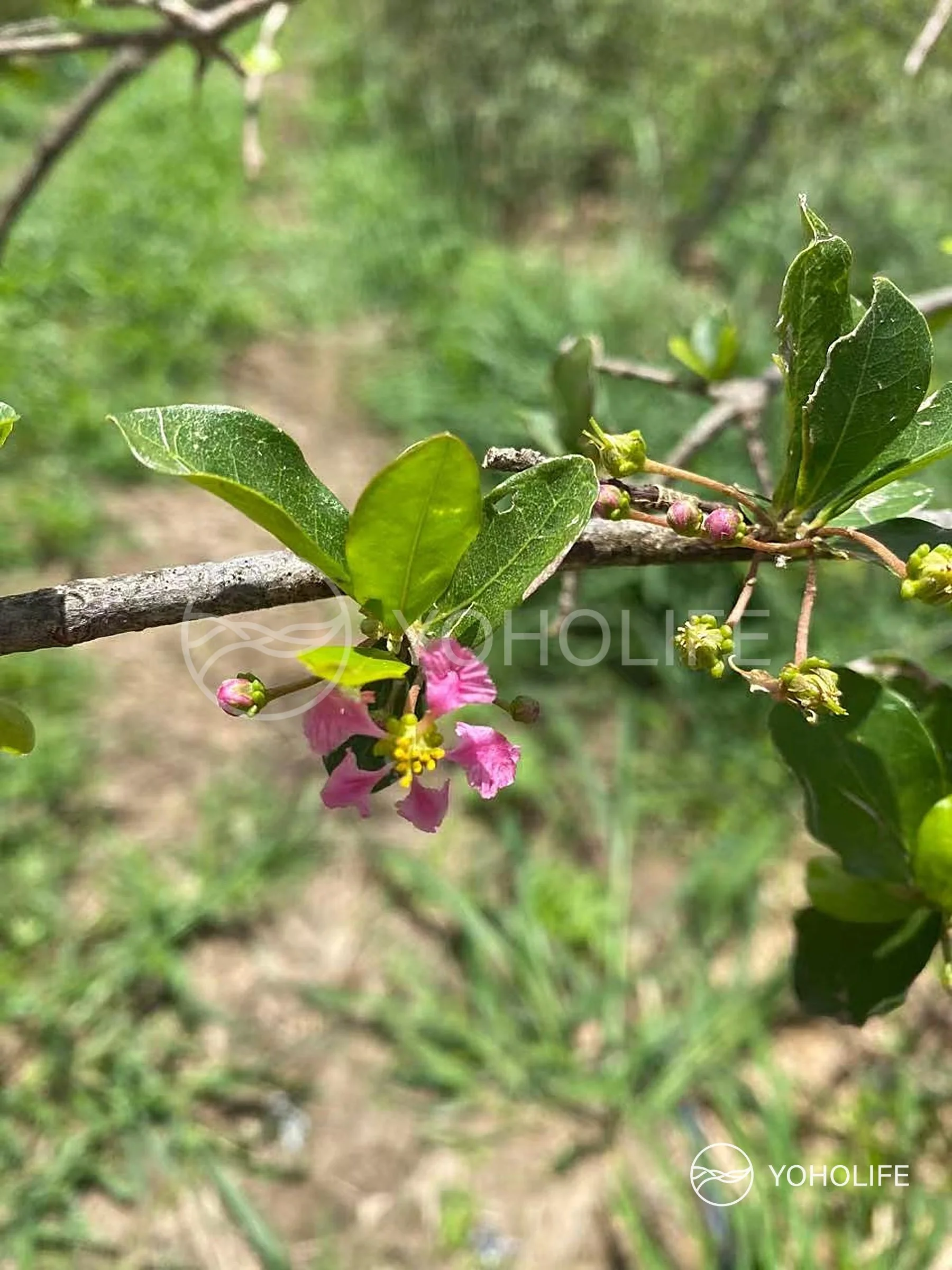
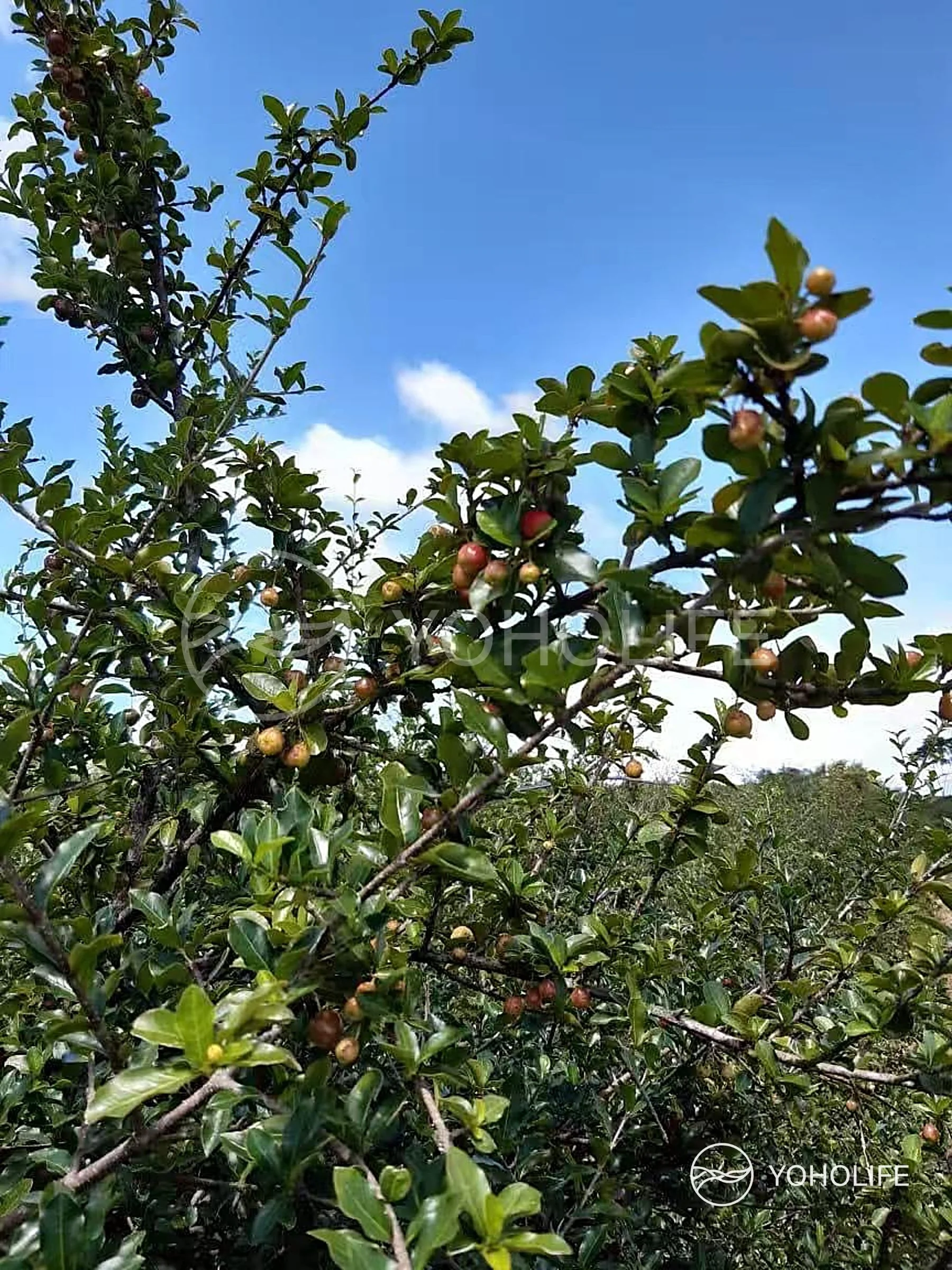
Acerola moves quickly. The fruit is ready three to four weeks after flowering, and an orchard flowers several times a year: three or four harvests is usual, and more are possible under irrigation.4 The photograph at the top of this note shows the whole sequence at once, laid out in a grower’s hands: a flower, green fruit, fruit turning yellow and ripe red fruit.
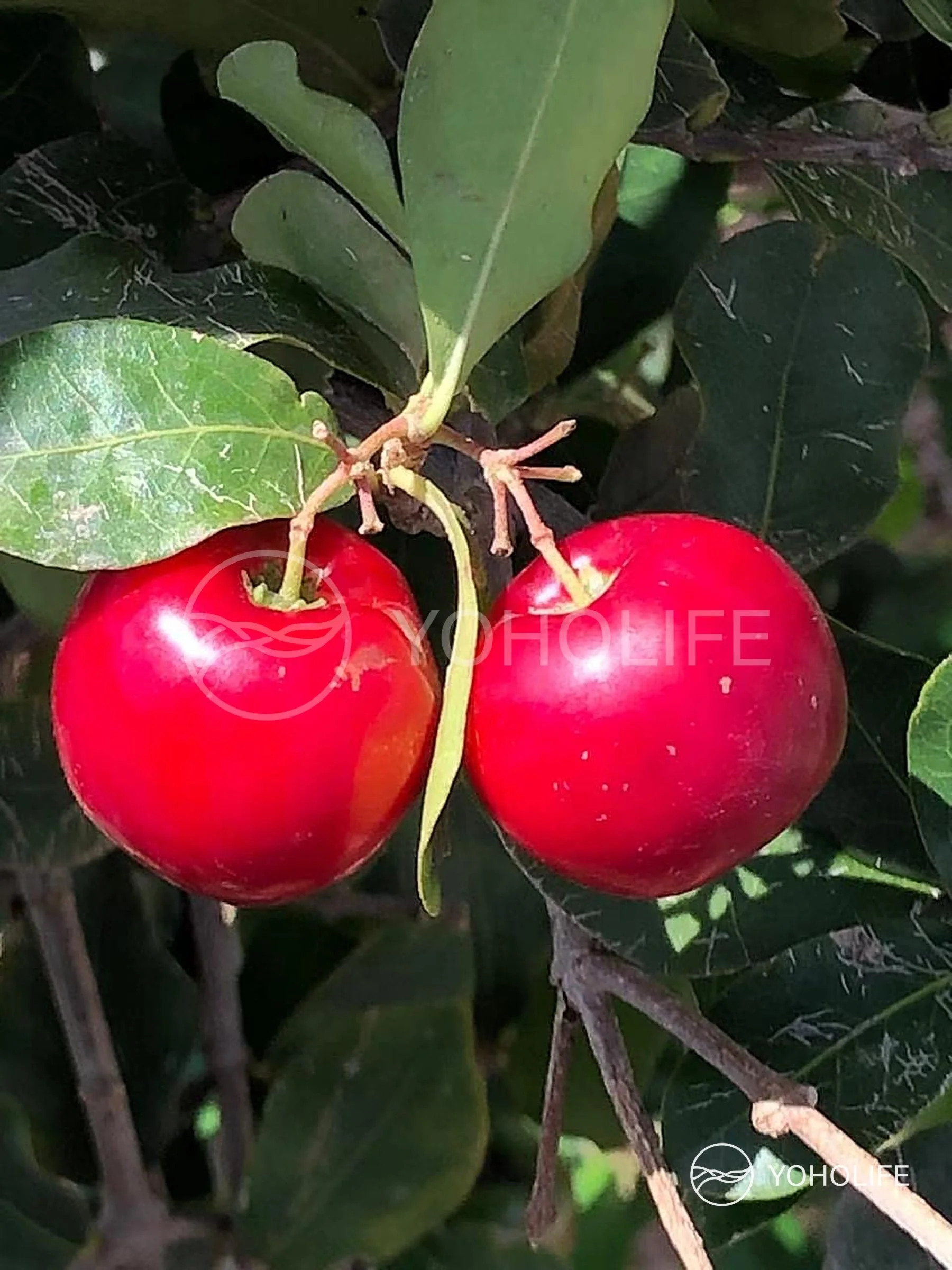
The colour change matters for more than appearance. Immature fruit holds the most vitamin C—up to about 4,000 mg per 100 g of pulp—so green acerola tends to be richer in it than ripe red fruit.5 Published figures for the fruit range widely—from about 1,500 to 4,500 mg per 100 g—depending on variety, ripeness and growing conditions.6
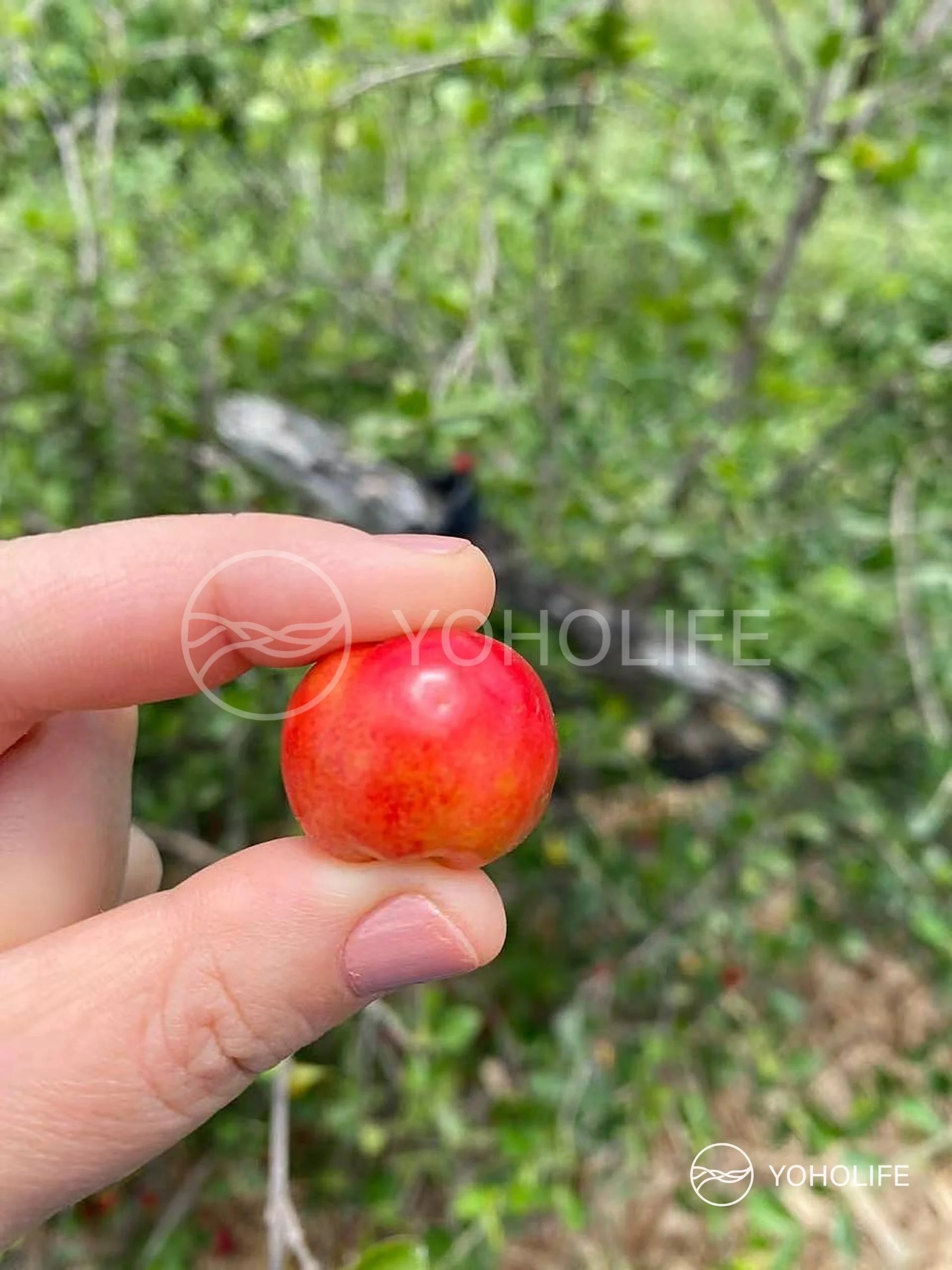
Ripe acerola is soft and highly perishable. Fruit is picked by hand two or three times a week; at room temperature it keeps for about three days, and even chilled for less than two weeks.4 That is why so much of the crop is processed soon after picking, close to where it grows.
03 / THE ORCHARD
Rows, posts and a shaded nursery
Acerola is grown across Brazil, but the Northeast dominates. In the 2017 agricultural census it supplied 78% of the country’s 60,966 tonnes, led by Pernambuco, Ceará, Sergipe and Paraíba.7
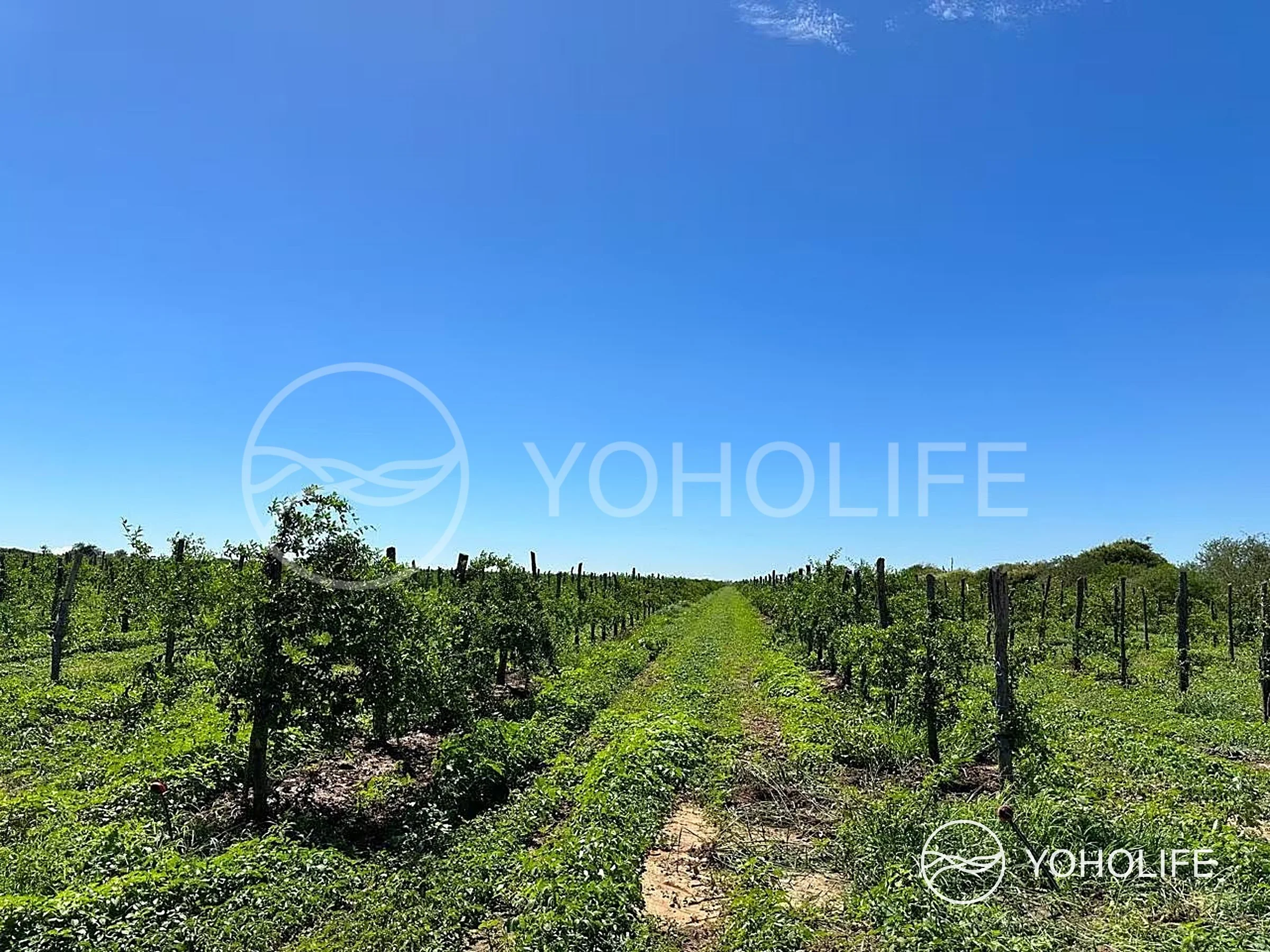
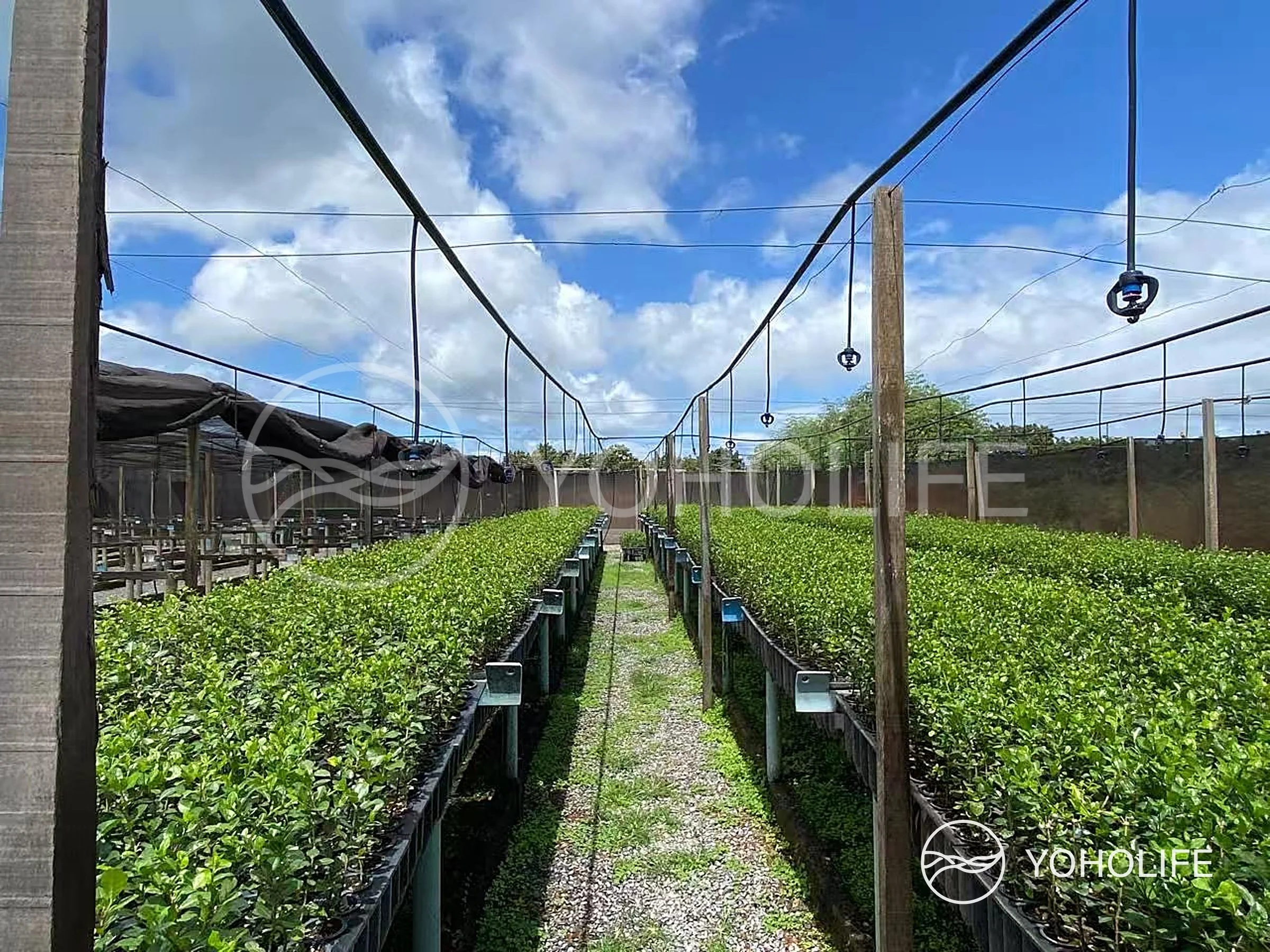
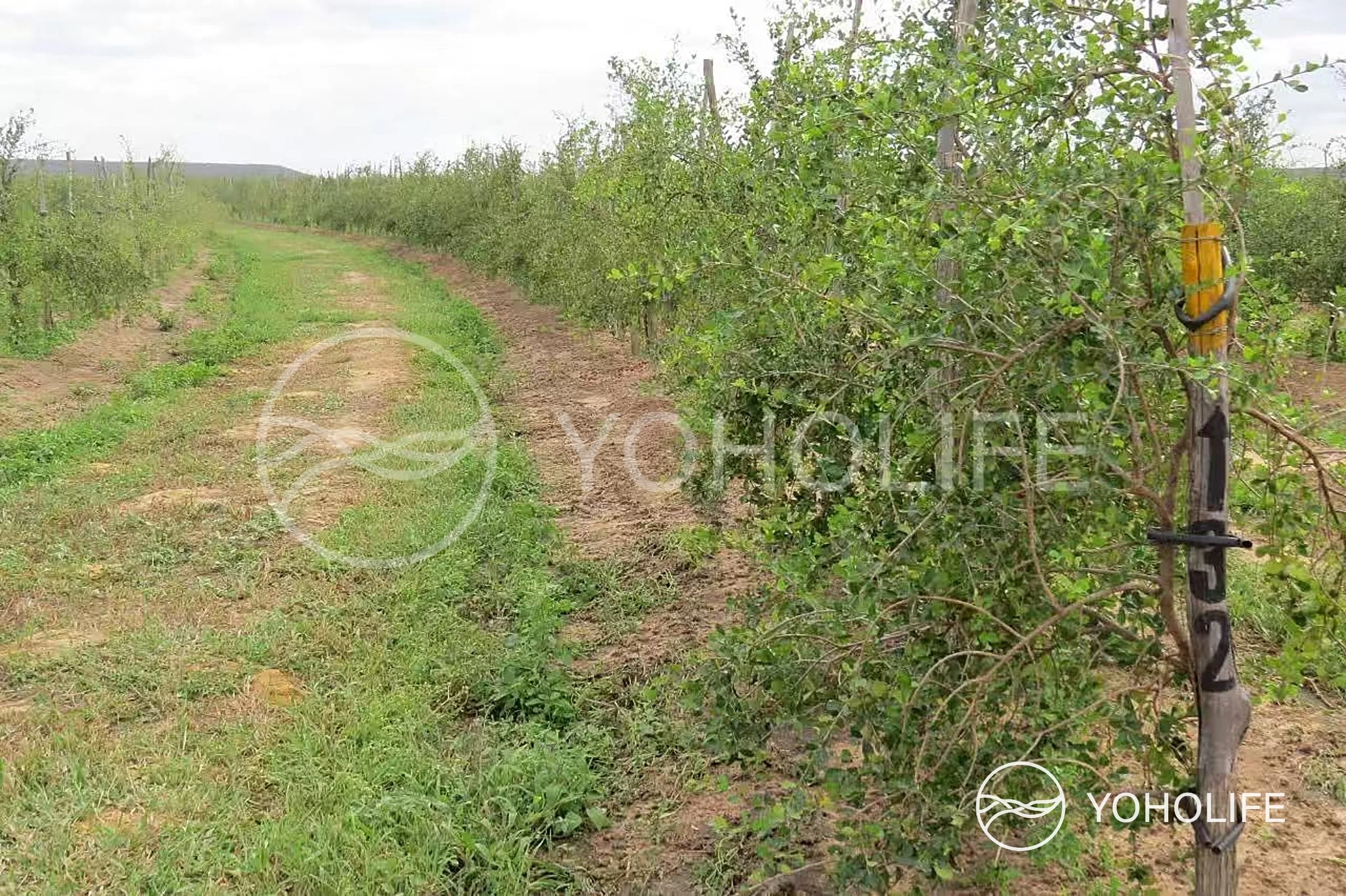
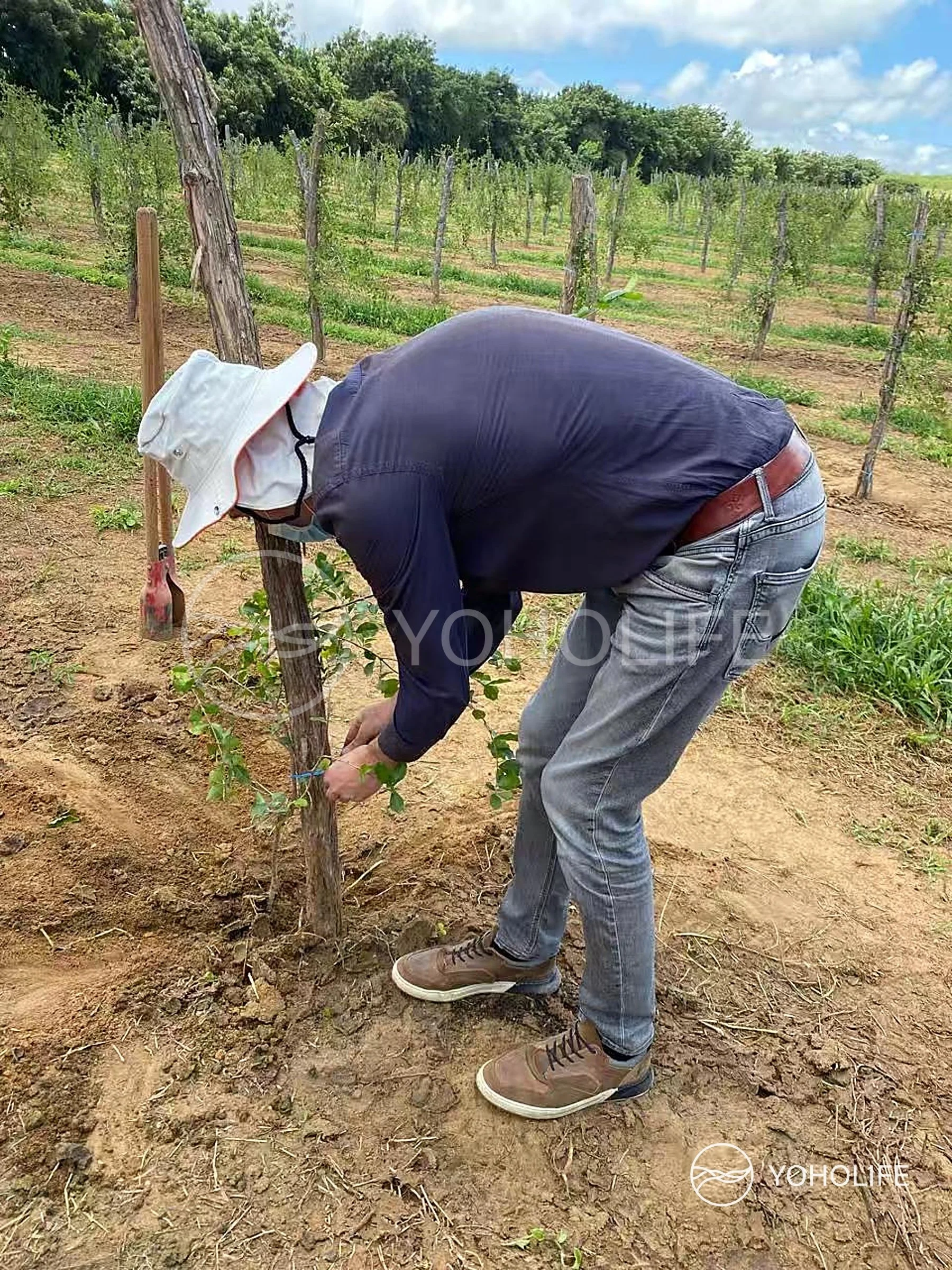
Much of the orchard work is quiet and manual: young trees are tied to their stakes and checked one by one, long before they carry fruit.
Seeing that work changes how we read a harvest. The fruit that reaches a processor in a few days is the result of years of planting, staking and pruning, and of a nursery that keeps the next generation of trees coming.
04 / FROM FRUIT TO SPECIFICATION
What a vitamin C figure needs to say
YOHOLIFE® offers acerola fruit extract across a vitamin C range of 1% to 25%. Our featured grades are 17% and 25% vitamin C.
A grade lets a formulator work backwards from a target. The EU nutrient reference value for vitamin C is 80 mg;8 supplying it takes about 0.47 g of the 17% grade or 0.32 g of the 25% grade. The choice changes how much extract a formula carries, and with it taste, colour and cost.
Acerola powders are commonly made by spray-drying concentrated juice with a carrier such as maltodextrin, and vitamin C in acerola products is generally measured by HPLC or by spectrofluorometric methods.9 Ask which carrier a grade contains and which method its certificate of analysis uses; our article on how to read a certificate of analysis shows where to look.
05 / WHAT RETURNS TO THE SOURCE
A harvest that carries something forward
At the end of the visit, the red of the fruit stays in our photographs. What we want to carry forward is less visible: trees that will flower again within weeks, the local work behind each picking, and a clearer understanding of the ingredient we bring to our customers.
For the plant: an orchard that flowers again
Acerola flowers several times a year, and the same trees are tended season after season. We see our cooperation with local growers as part of that continuity, not as a single purchase.
For the growers: work that stays at the source
Picking acerola is frequent, careful handwork. Working with local growers keeps part of the value of the ingredient with the people whose labour brings it in.
For the land: care beyond a single harvest
Water, soil and shade decide how an orchard and its nursery fare from one season to the next. Following the source keeps them part of our conversations with growers, alongside quality and supply.
For our customers: a clear specification
For the formulators who use our ingredients, our contribution is a known botanical source, a clearly stated vitamin C grade and documents that explain how it was measured.
We went to Brazil to see where acerola begins. We came back with a clearer sense of how short the distance is between a blossom and a specification, and how much care fits into it. Our companion field note on guaraná follows a very different crop from the same journey.
A fruit that ripens in weeks depends on work that lasts for seasons.
Visit details and the described extract grades were supplied by YOHOLIFE®. Production figures are from Brazil’s 2017 agricultural census (source 7). The photographs were taken by YOHOLIFE® in Brazil and sharpened for the web, without redrawing anything.
