
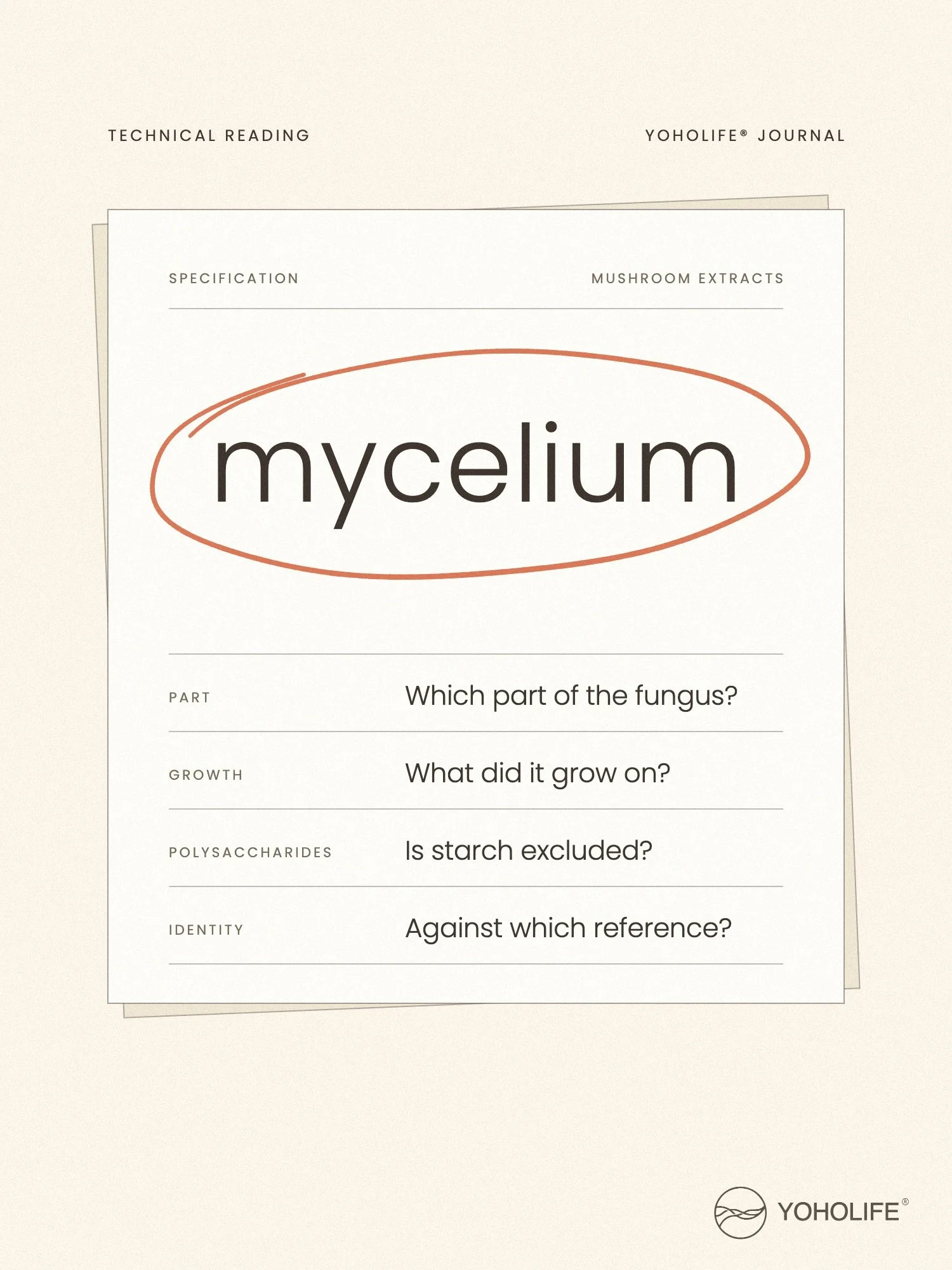
Fruiting body or mycelium: how to read a mushroom extract specification
A mushroom extract can be made from the fruiting body, from the mycelium or from both. On a specification, the line that names the part affects how the other rows are read: what the material grew on, what its polysaccharide figure can include, and how it can be identified. Four checks to make on a mushroom extract specification.
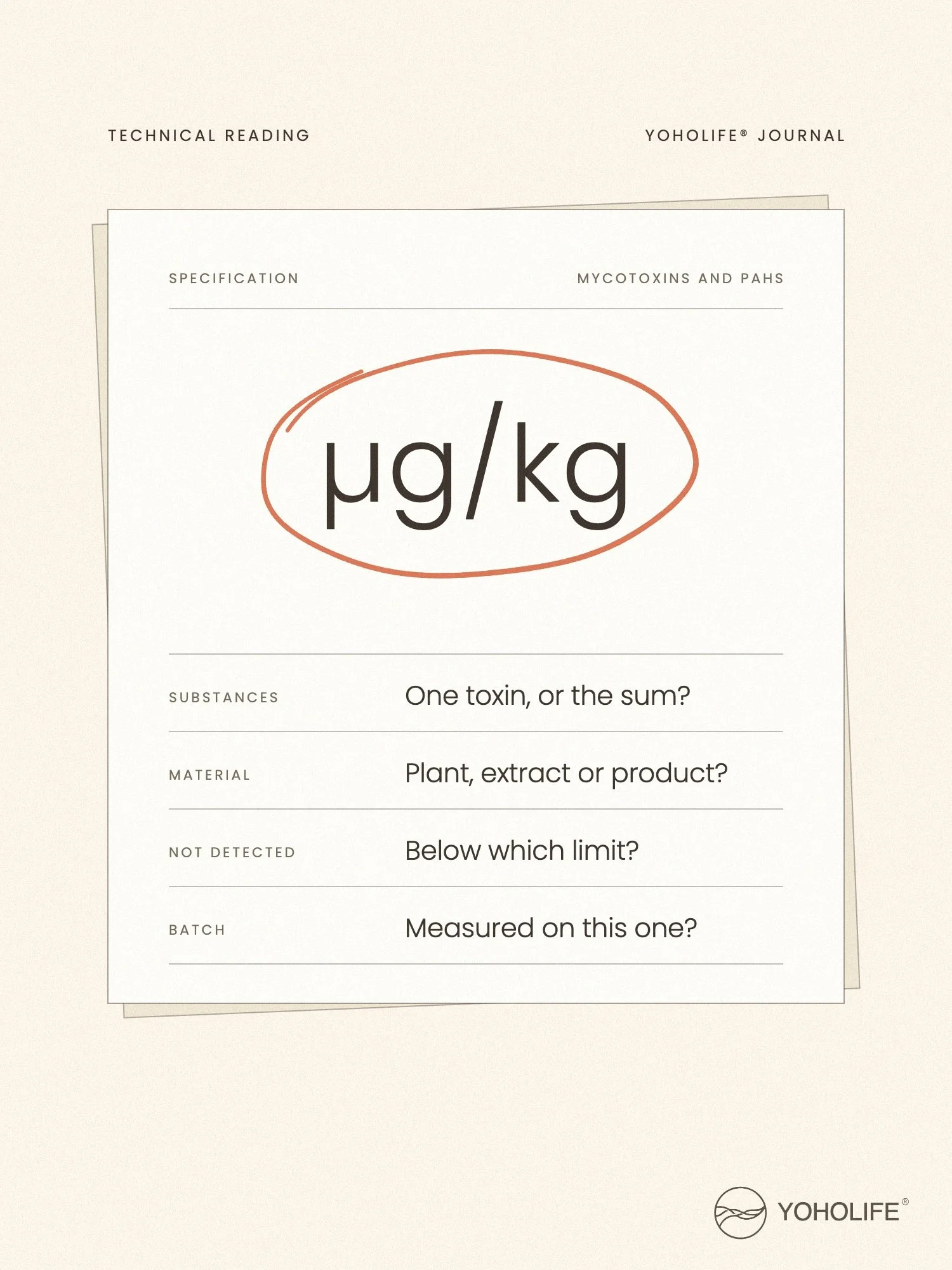
How to read the mycotoxin and PAH rows on an extract specification
Mycotoxins are toxins produced by moulds that grow on a crop in the field or in storage. Polycyclic aromatic hydrocarbons, or PAHs, reach plant material from the environment or from the way it is dried. Six checks to make on the mycotoxin and PAH rows of an extract specification.
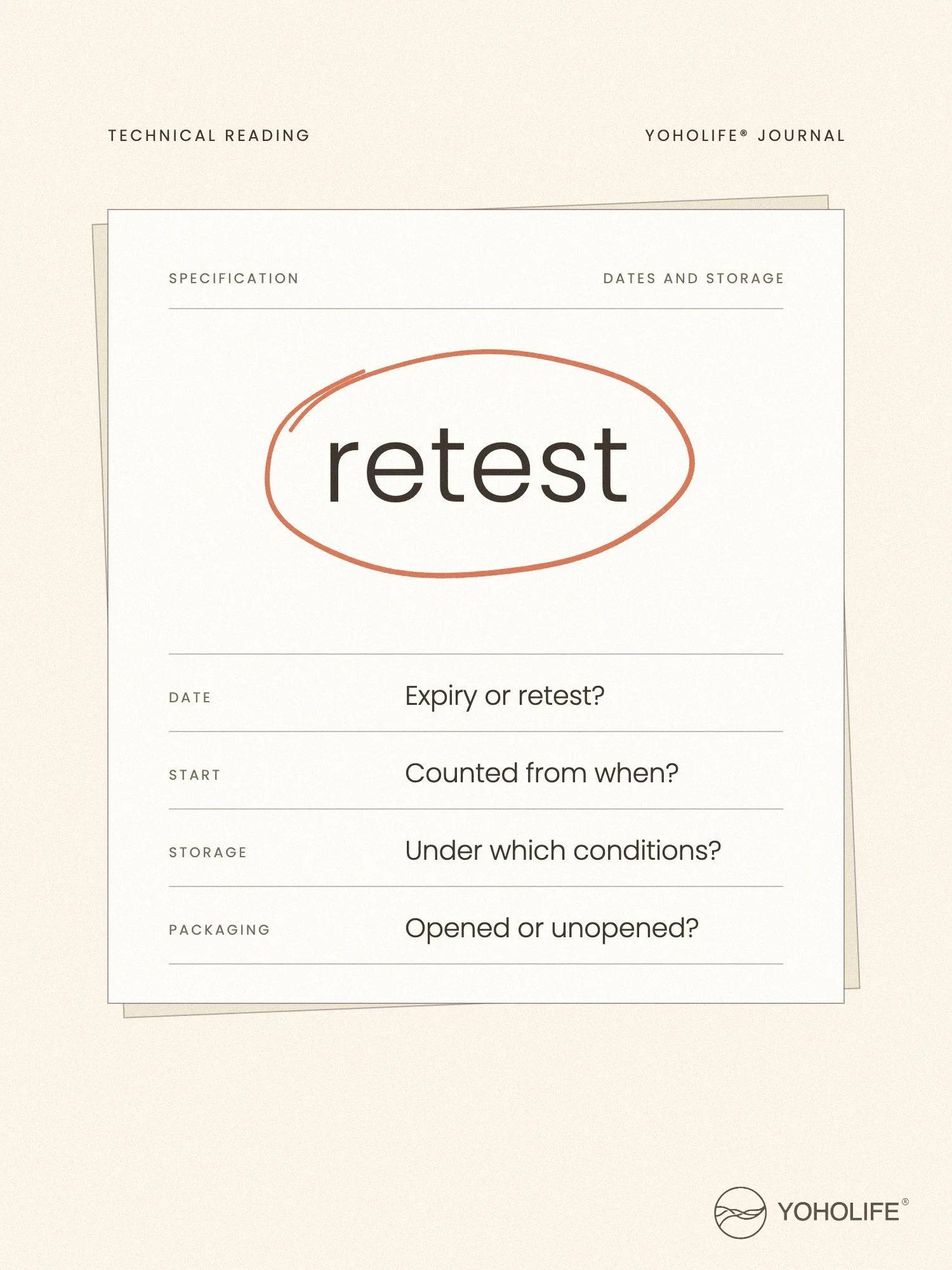
How to read the shelf life, retest date and storage rows on an extract specification
A shelf life is the period in which a material is expected to stay within its specification, provided it is stored as stated. A retest date is not an expiry date: after a retest date the material is examined again before use, while after an expiry date it should not be used. Six checks to make on the shelf life and storage rows.
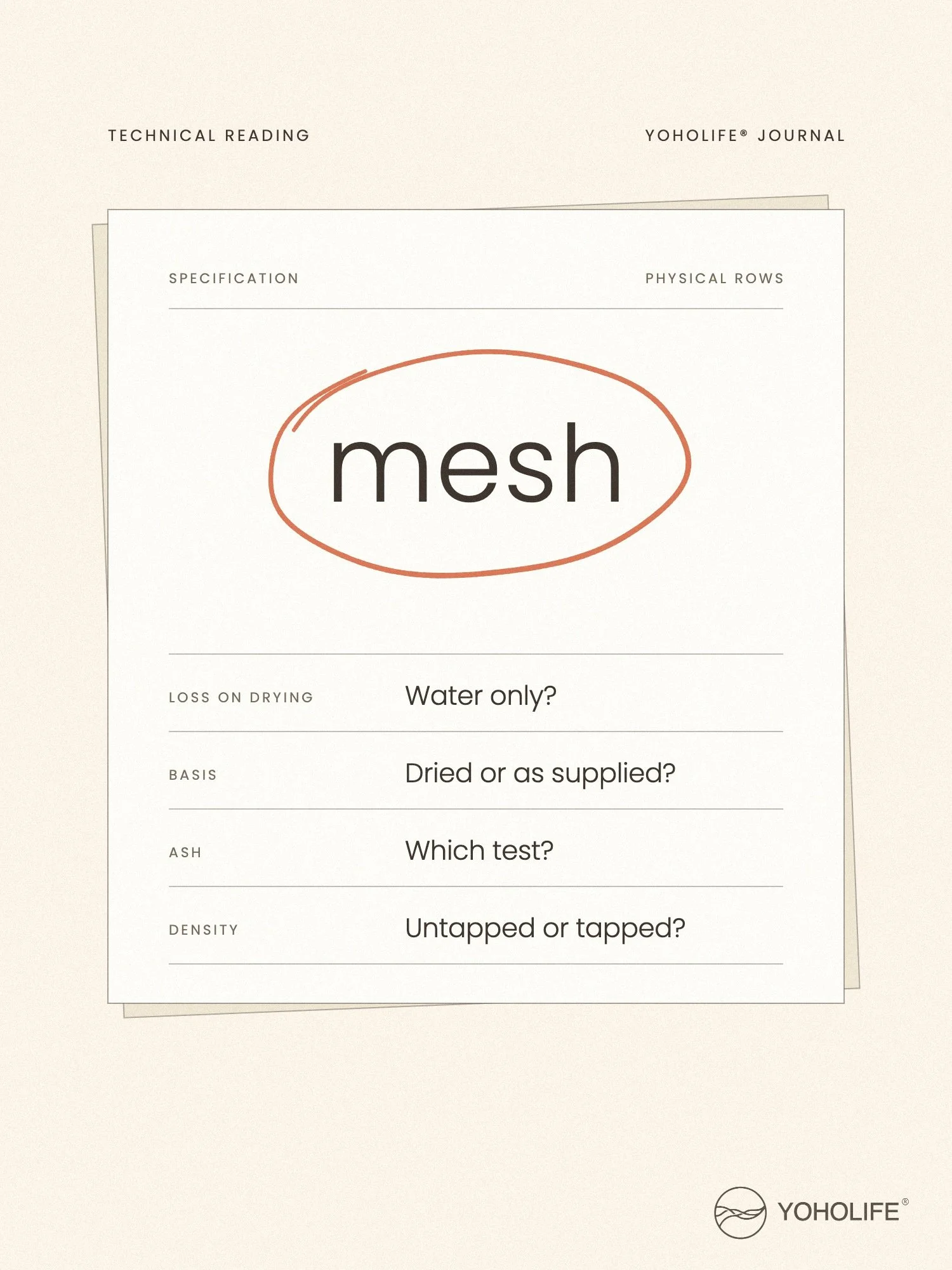
How to read the loss on drying, ash and particle size rows on an extract specification
Loss on drying is the weight a sample loses when it is dried under stated conditions: water, and anything else that evaporates. Ash is what remains when the sample is burned, and a sieve row gives the share of the powder that passes a named sieve. Six checks to make on the physical rows.
How to read the identification row on an extract specification
An identification test compares a sample of the extract with a reference for the plant named on the specification. “Positive” or “complies” means that the two matched in that test. Six checks to make on the identification row.
How to read the microbiological rows on an extract specification
A plate count is the number of colonies grown from a sample of the extract, calculated per gram. “Absent” means not found in the quantity that was tested. Six checks to make on the microbiological rows.
Why the same extract gives different figures by UV and by HPLC
A UV assay counts everything that absorbs at one wavelength. HPLC separates the compounds first and counts the ones it names. Six checks to make before you compare two assay figures.
How to read the heavy metal and pesticide rows on an extract specification
Metal limits are set element by element, for a named product. Pesticide limits are set for the raw plant, and extraction changes the figures. Six checks to make on these two rows.
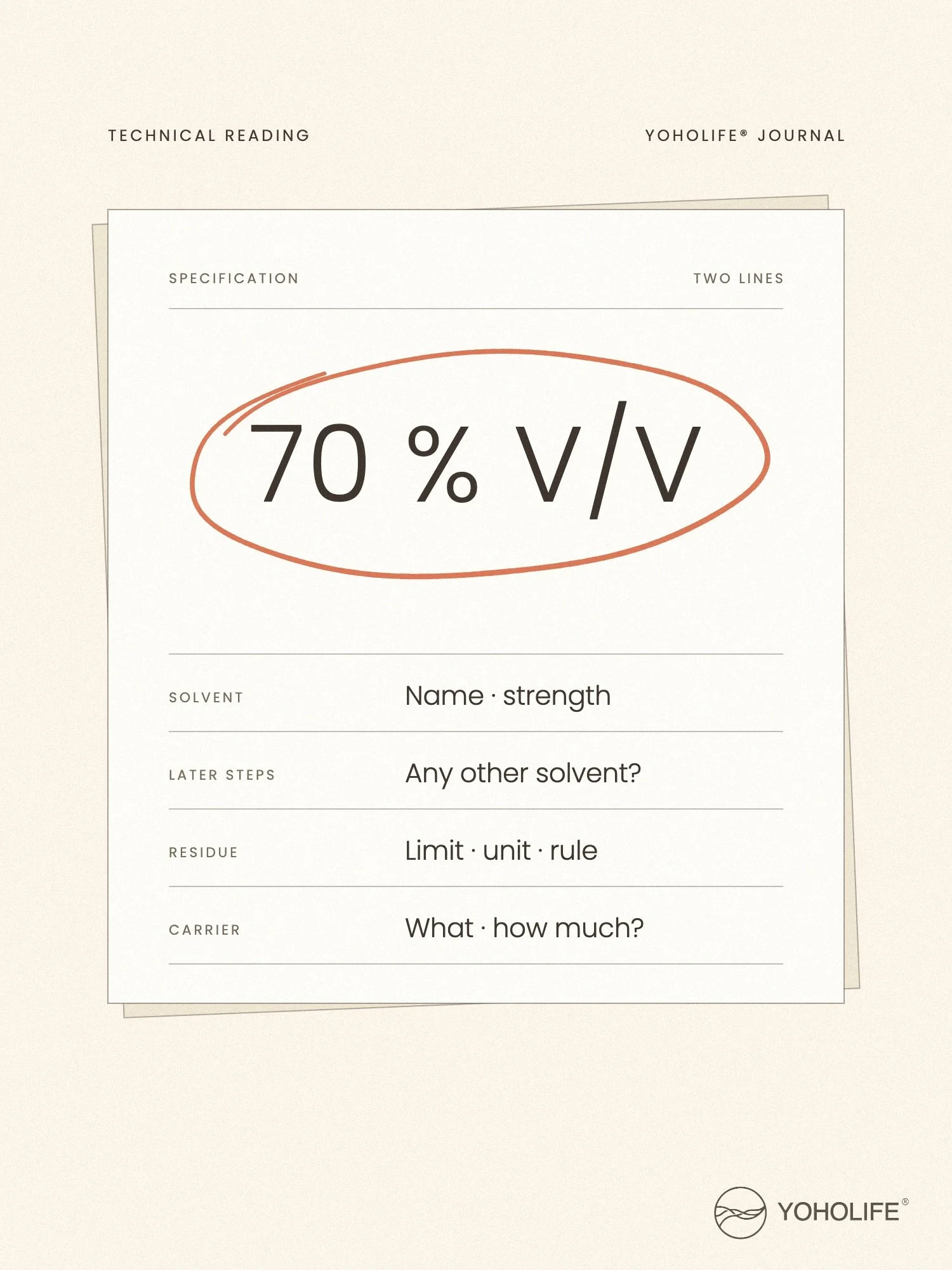
How to read the solvent and carrier lines on an extract specification
The extraction solvent decides what comes out of the plant. The carrier is what goes into the powder besides the extract. Six checks to make on these two lines.
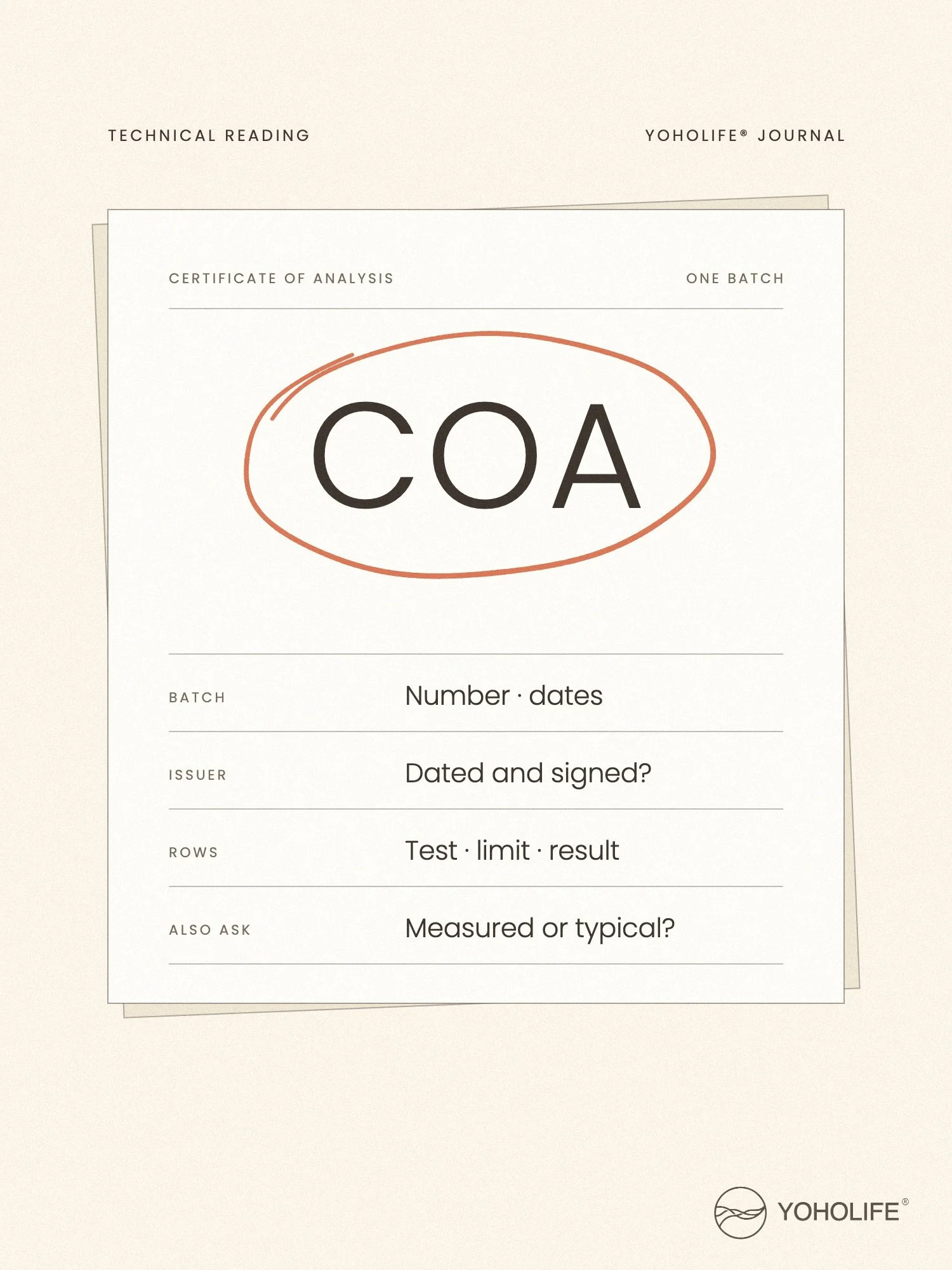
How to read a Certificate of Analysis for a botanical extract
A specification says what a grade should be. A Certificate of Analysis says what one batch was found to be. Seven checks to make before you rely on one.
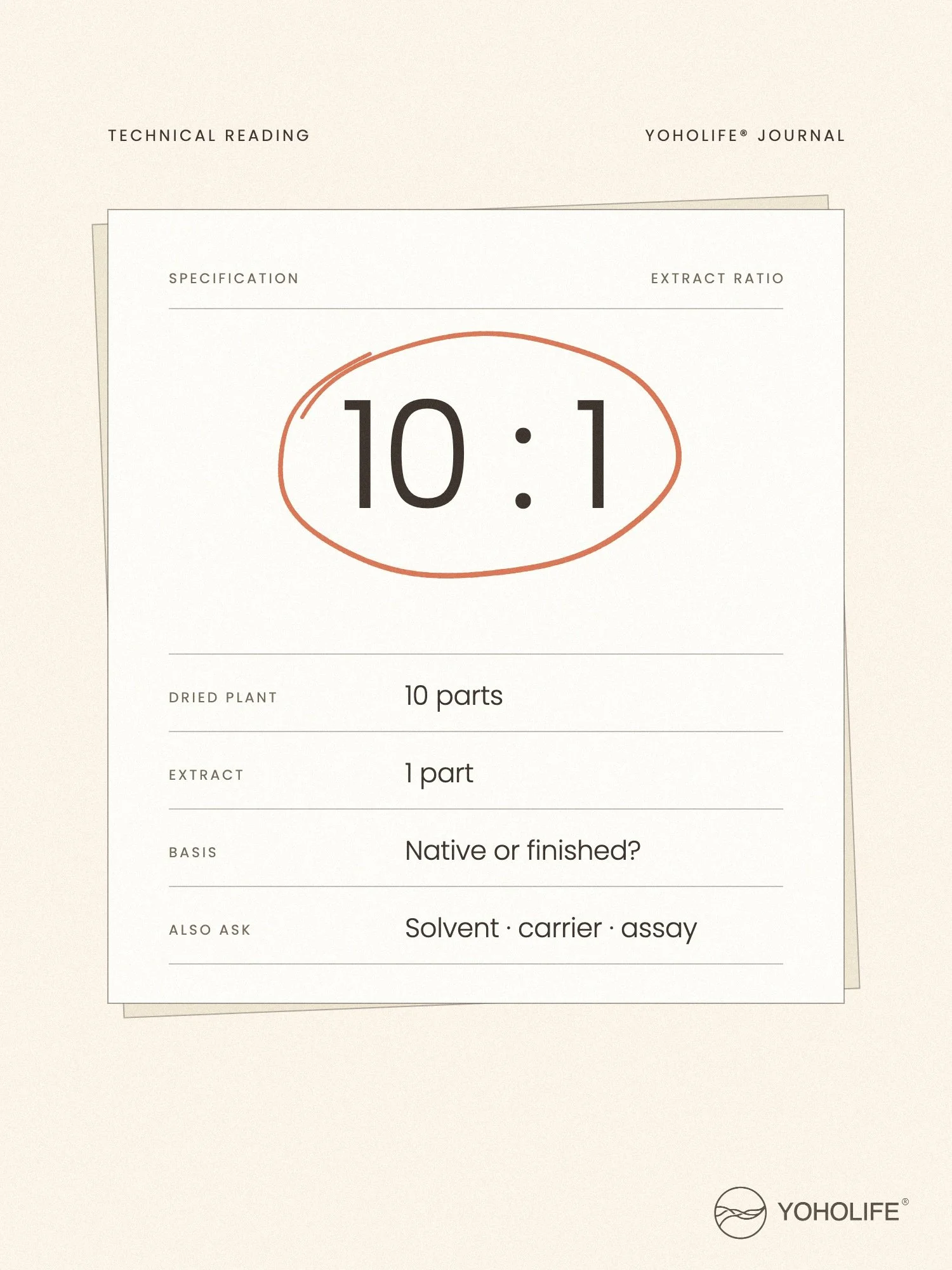
What a 10:1 extract ratio tells you, and what it does not
A 10:1 ratio states how much dried plant went into one part of extract. It does not state how strong the extract is. Six checks to make before you compare two ratios.
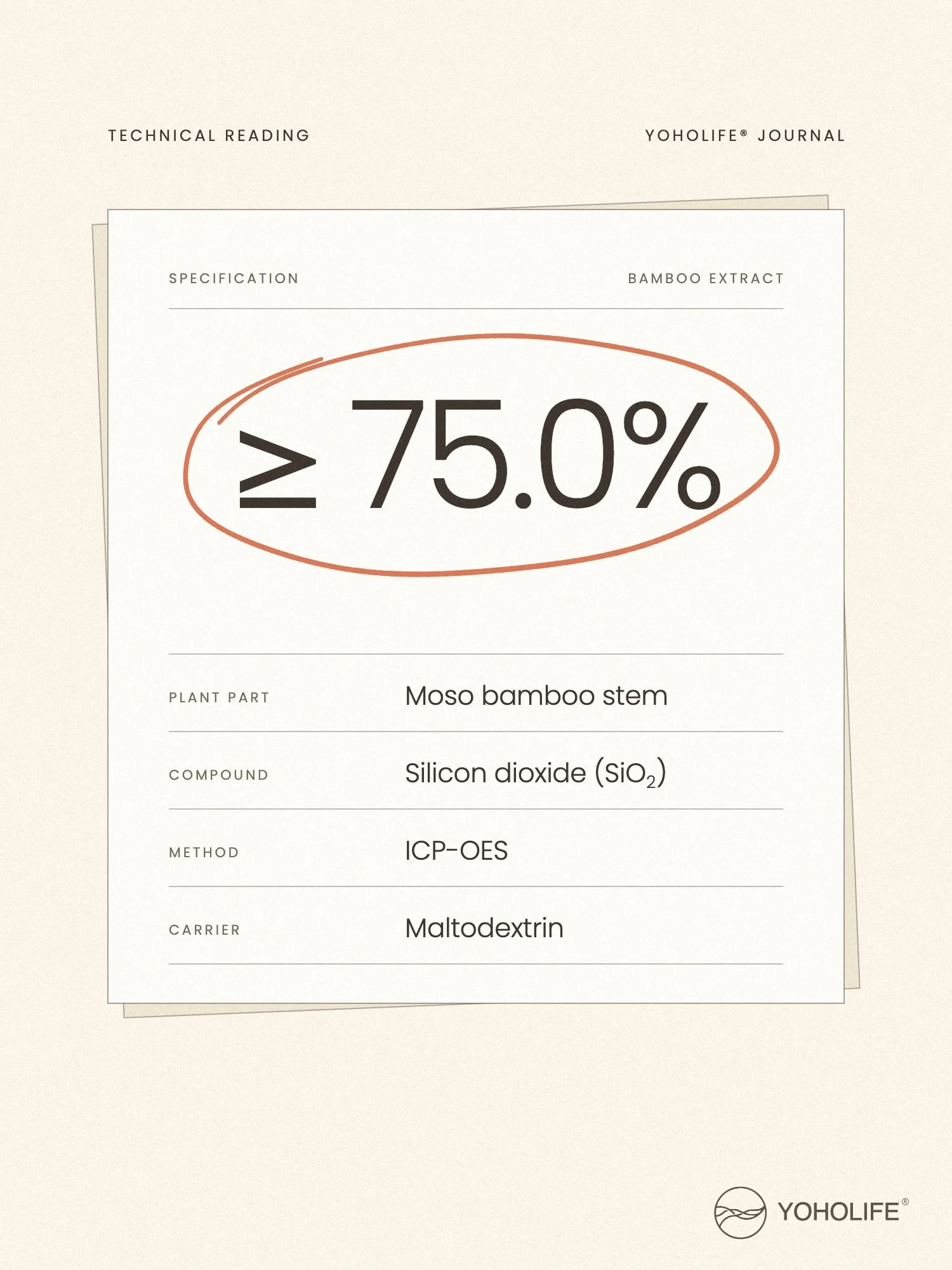
How to read a botanical extract specification before you request a quote
Two extracts can share a headline percentage and still be different materials. Seven checks to make on a specification, and what to send when you ask for a price.
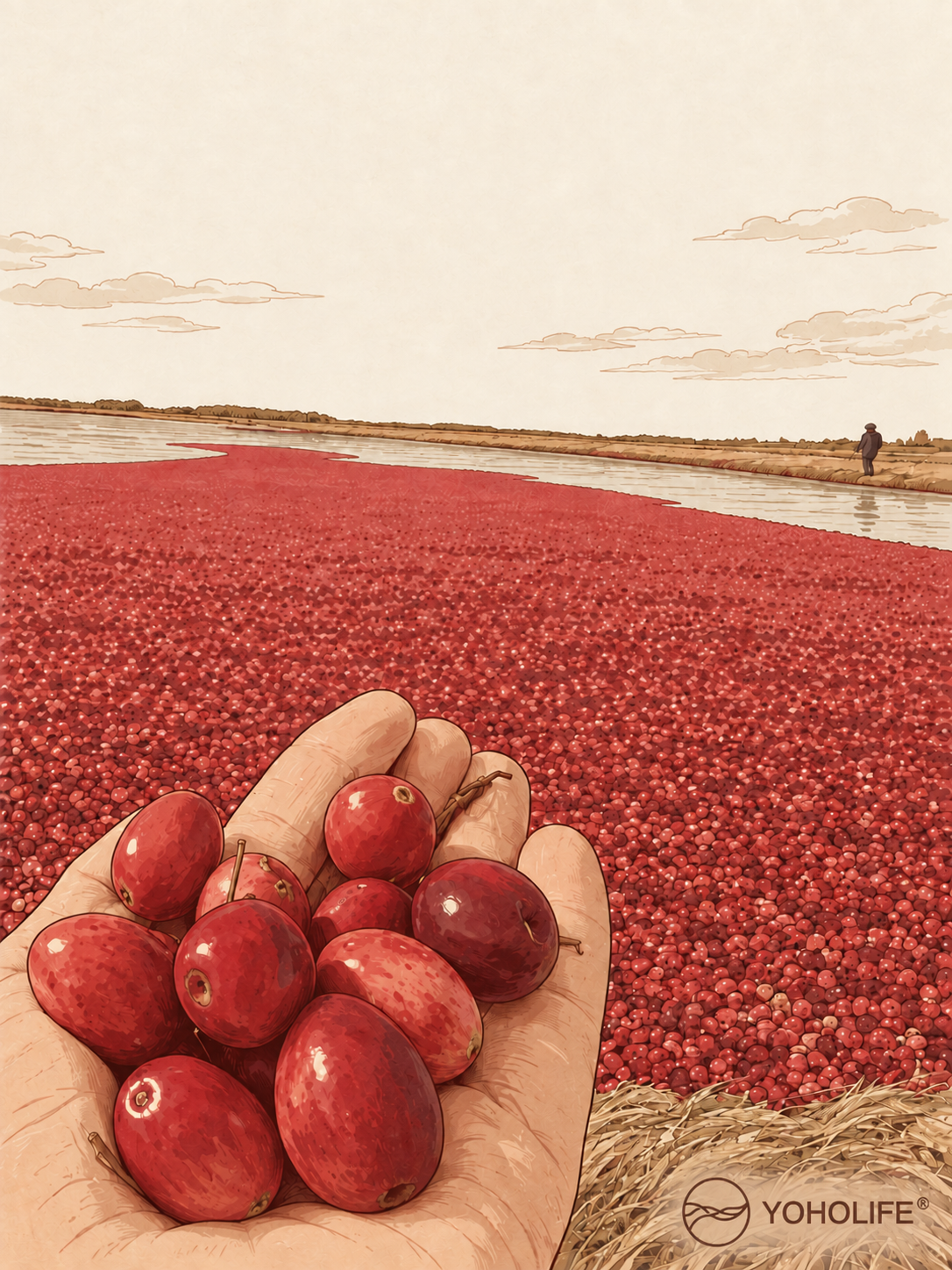
A Sea of Red: At the Source of Our Cranberries
At our long-standing partner’s 4,200-mu cranberry base in Heilongjiang, YOHOLIFE® follows the red harvest through water and land—exploring cultivation, local work and the science behind a precisely specified ingredient.
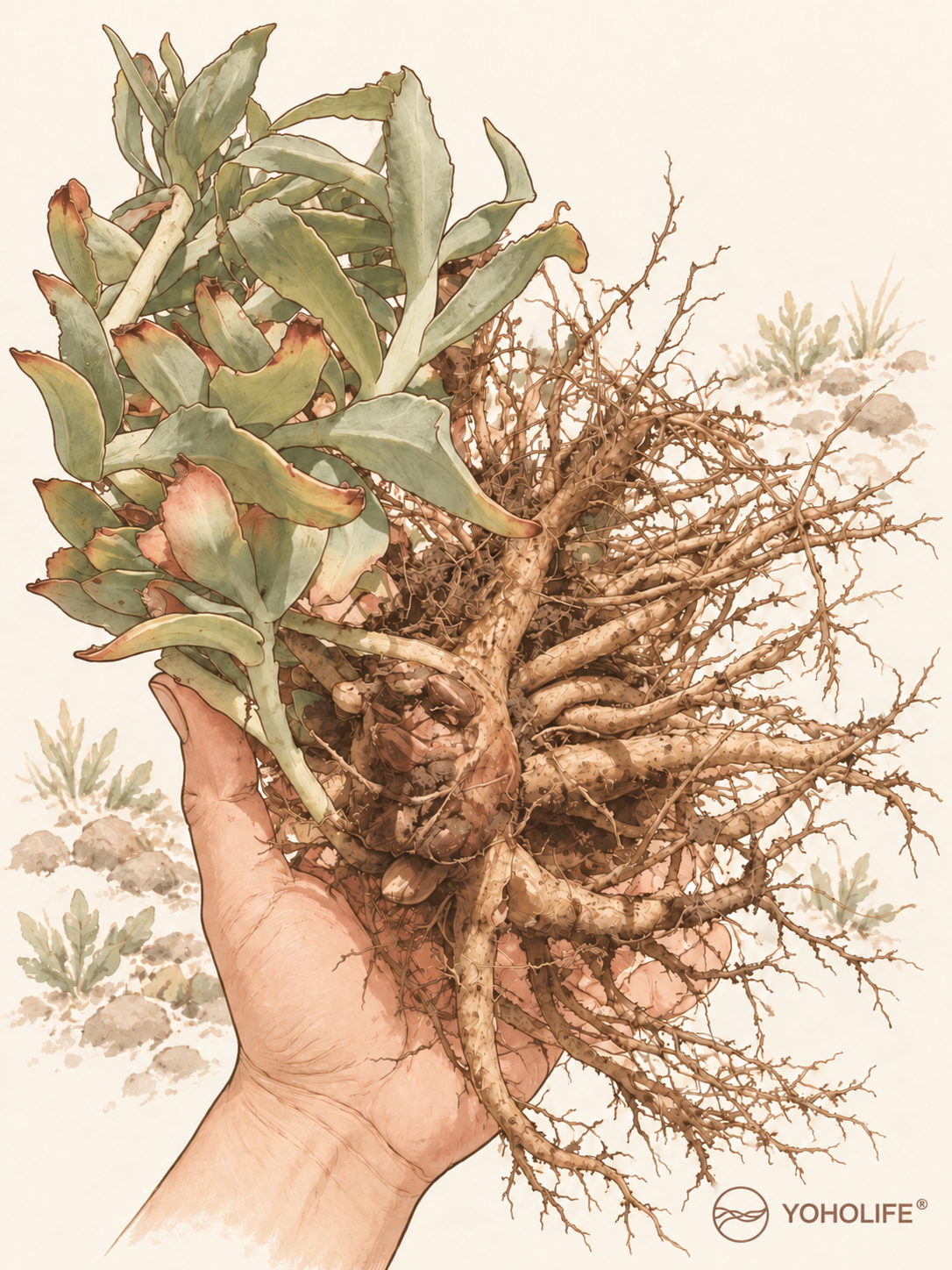
What We Take, What We Give Back
In Hebei, China, we follow Rhodiola from carefully propagated plantlets to mature roots—and meet the local work behind the harvest. Field notes on patient cultivation, shared value and our responsibility to what grows next.
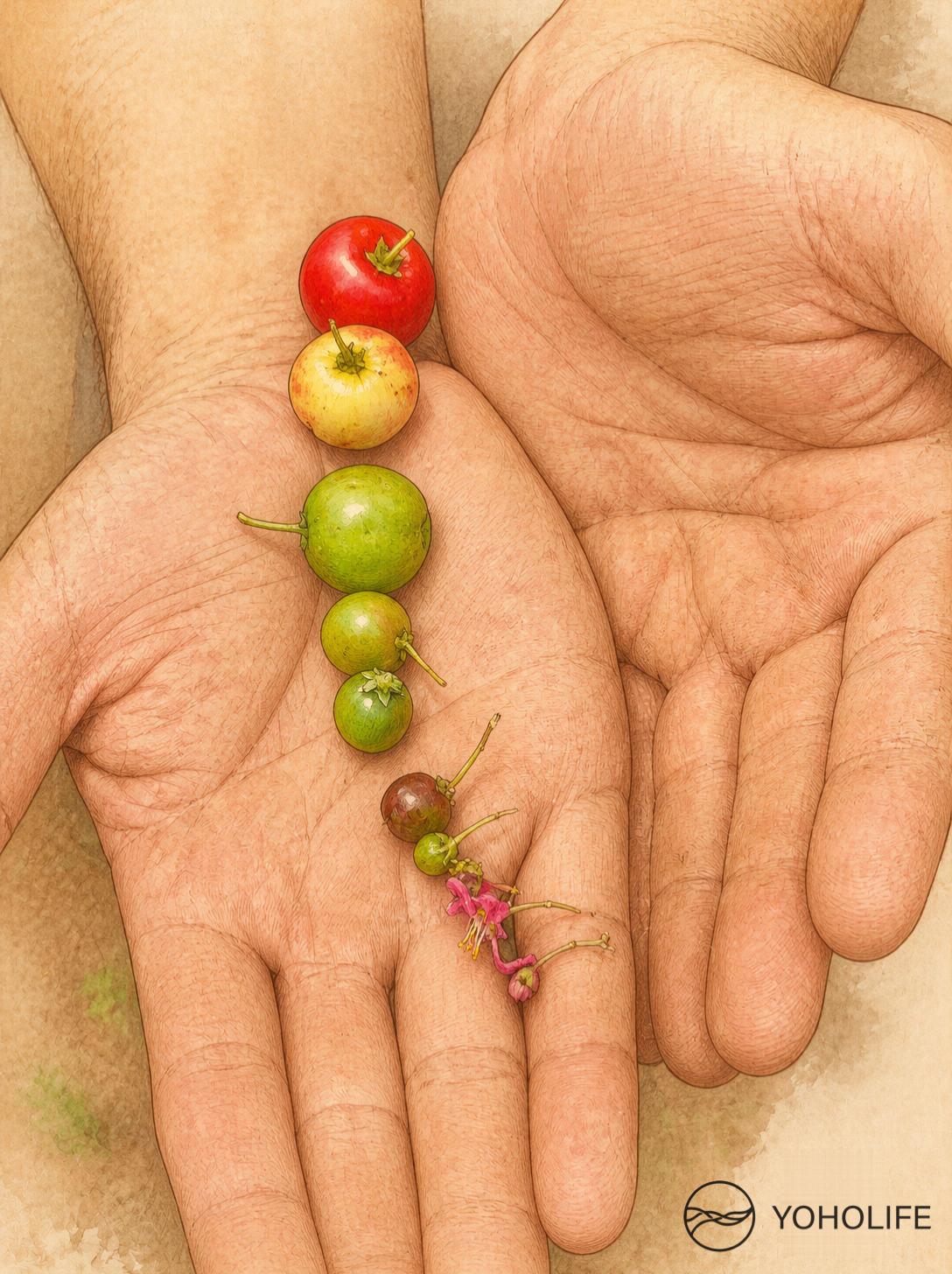
From Blossom to Red: At the Source of Our Acerola
In the orchards of the acerola growers we work with in Brazil, flowers, green fruit and red fruit share one branch. Field notes on a fast, fragile harvest—and on what a 17% or 25% vitamin C grade needs to say.
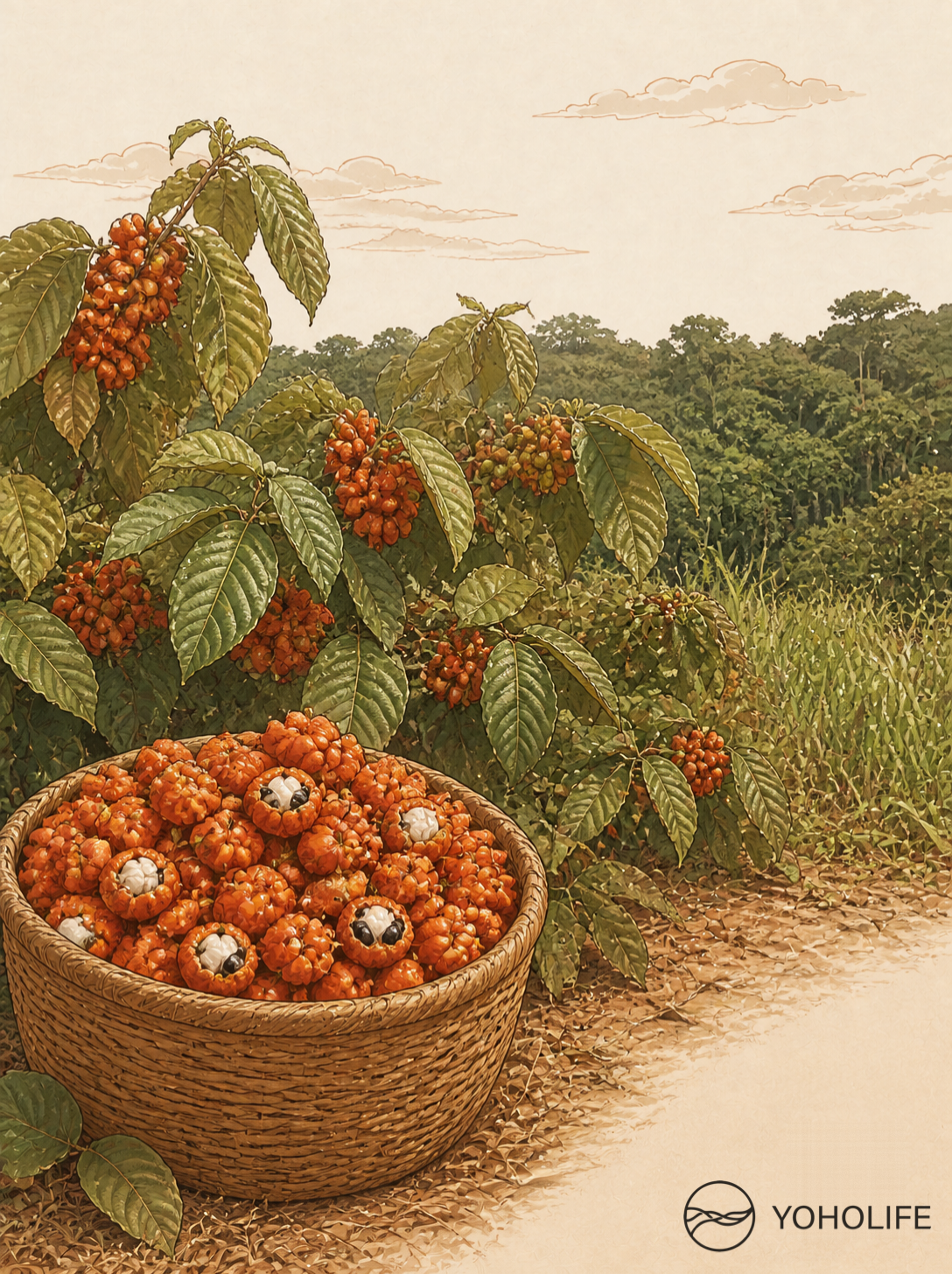
Where the Fruit Opens: At the Source of Our Guaraná
With the guaraná growers we work with in Brazil, YOHOLIFE® follows a familiar ingredient back to its plant—fruit that splits open when ripe, gathered by hand—and to the seed behind our 10% and 22% caffeine grades.