
What We Take, What We Give Back
Field notes from our Rhodiola cultivation partnership
Visit: 4 October 2026 · Hebei, China
A root can fit in the palm of a hand. The years behind it cannot.
On 4 October 2026, the YOHOLIFE® team visited our partner's Rhodiola growing base in Hebei, China. We came to follow an ingredient back beyond its specification: to the soil in which it grows, the time it needs, and the people whose work makes its journey possible.
The plot we visited covers four mu, approximately 0.27 hectares, at an elevation of around 1,600 metres. Its scale is modest. The questions it asks of us are larger. How do we use a plant without forgetting what it takes to grow it? How can the value of an ingredient reach the community at its source?
These are the questions we brought home.
01 / PROPAGATION
A beginning, under shelter
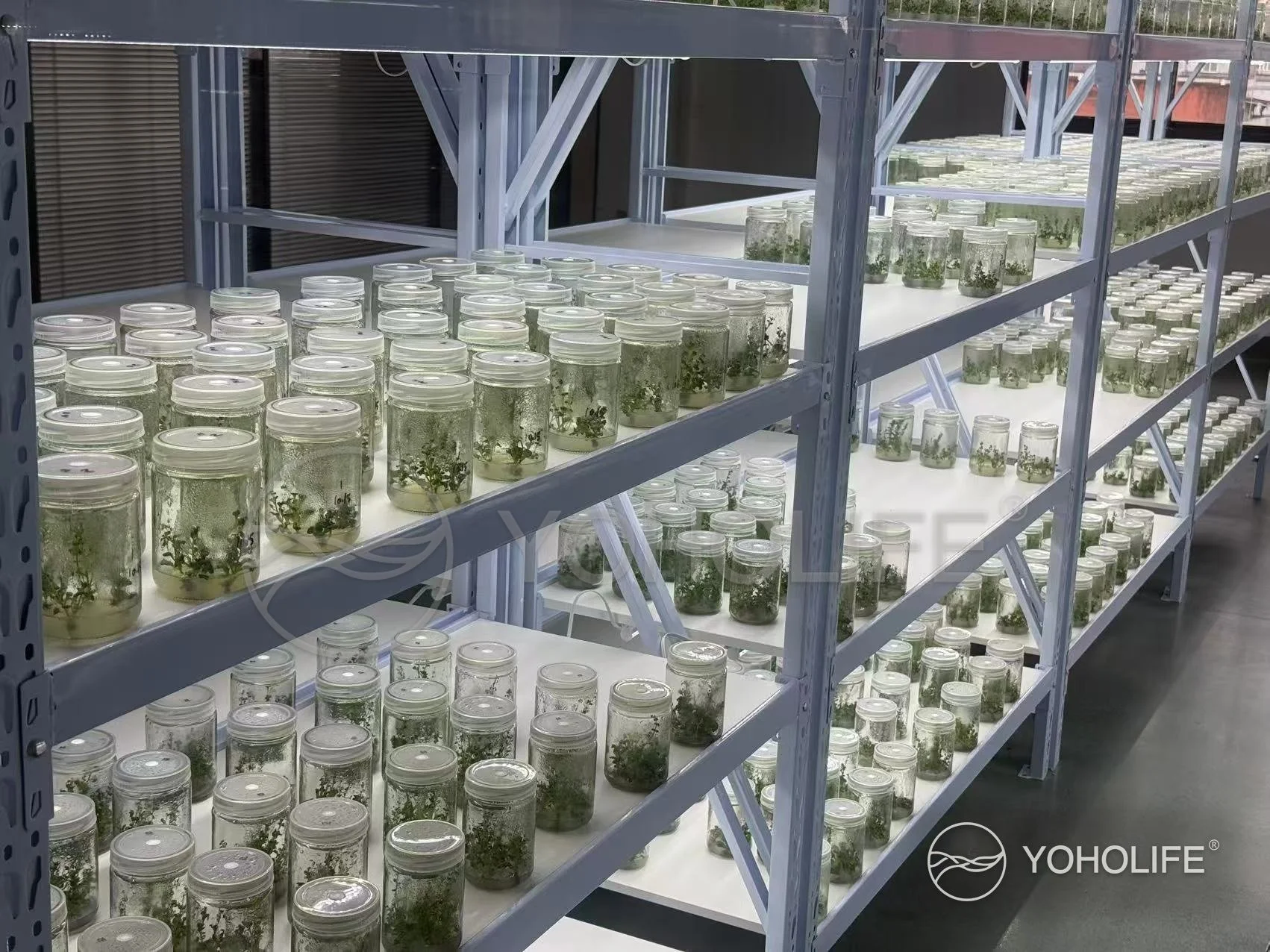
The journey begins before a young plant reaches the mountain soil.
Working with specialist partners in China, YOHOLIFE® supports the propagation of Rhodiola plantlets through clonal propagation. In the nursery photographs, small plants grow in vessels and trays: a quiet, careful beginning for a botanical associated with exposed landscapes.
At six months, the plants are still in this early chapter. Their size offers little indication of the years that lie ahead. They must first establish themselves under managed conditions, before they are ready for the demands of the field.
Under our partner's cultivation process, plantlets spend approximately a year in nursery cultivation before being transplanted into the growing base. Propagation makes further planting possible; it does not remove the need for patience. Each new plant still requires care, suitable conditions and time.
- 1 yearNursery cultivationApproximately one year before transplantation. The six-month plants pictured here are within this stage.
- + 3 yearsField cultivationApproximately three further years after transplantation, before roots are harvested.
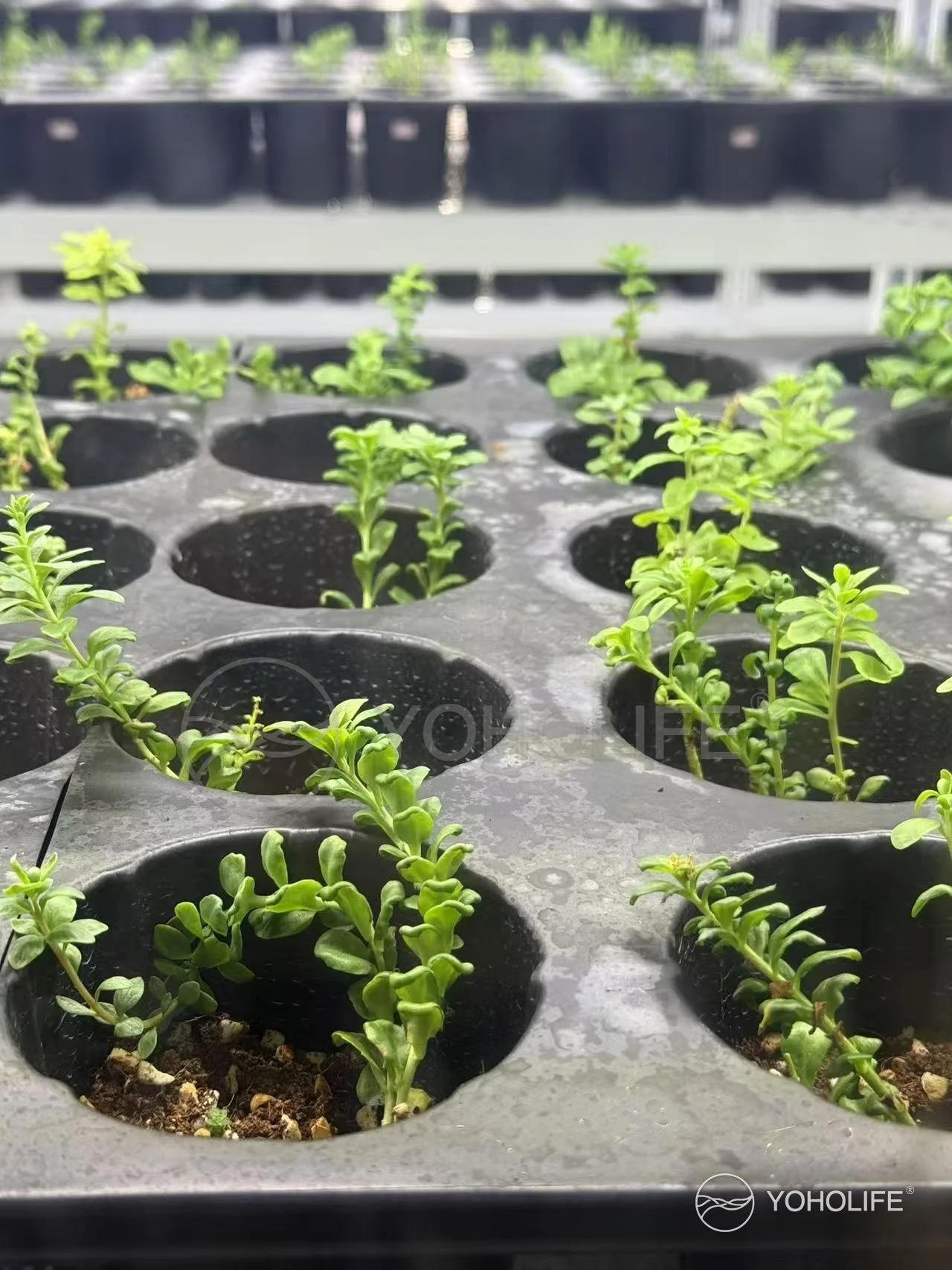
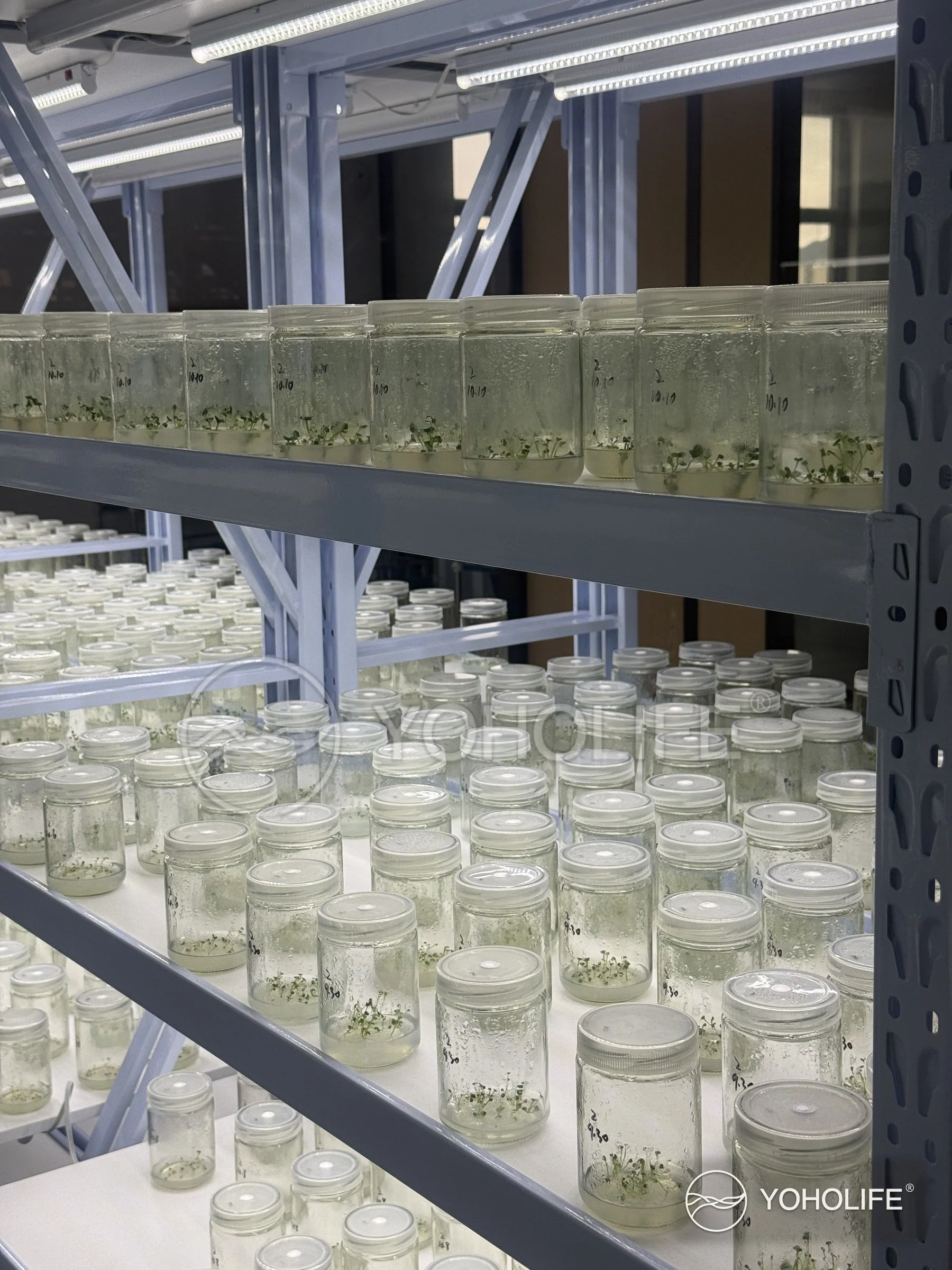
An additional view of the nursery brings the beginning into closer focus. Rows of propagation jars hold young plantlets on illuminated shelves. Each small plant is part of the cultivated source we hope to carry into future growing seasons.
02 / CULTIVATION
Learning the pace of the land
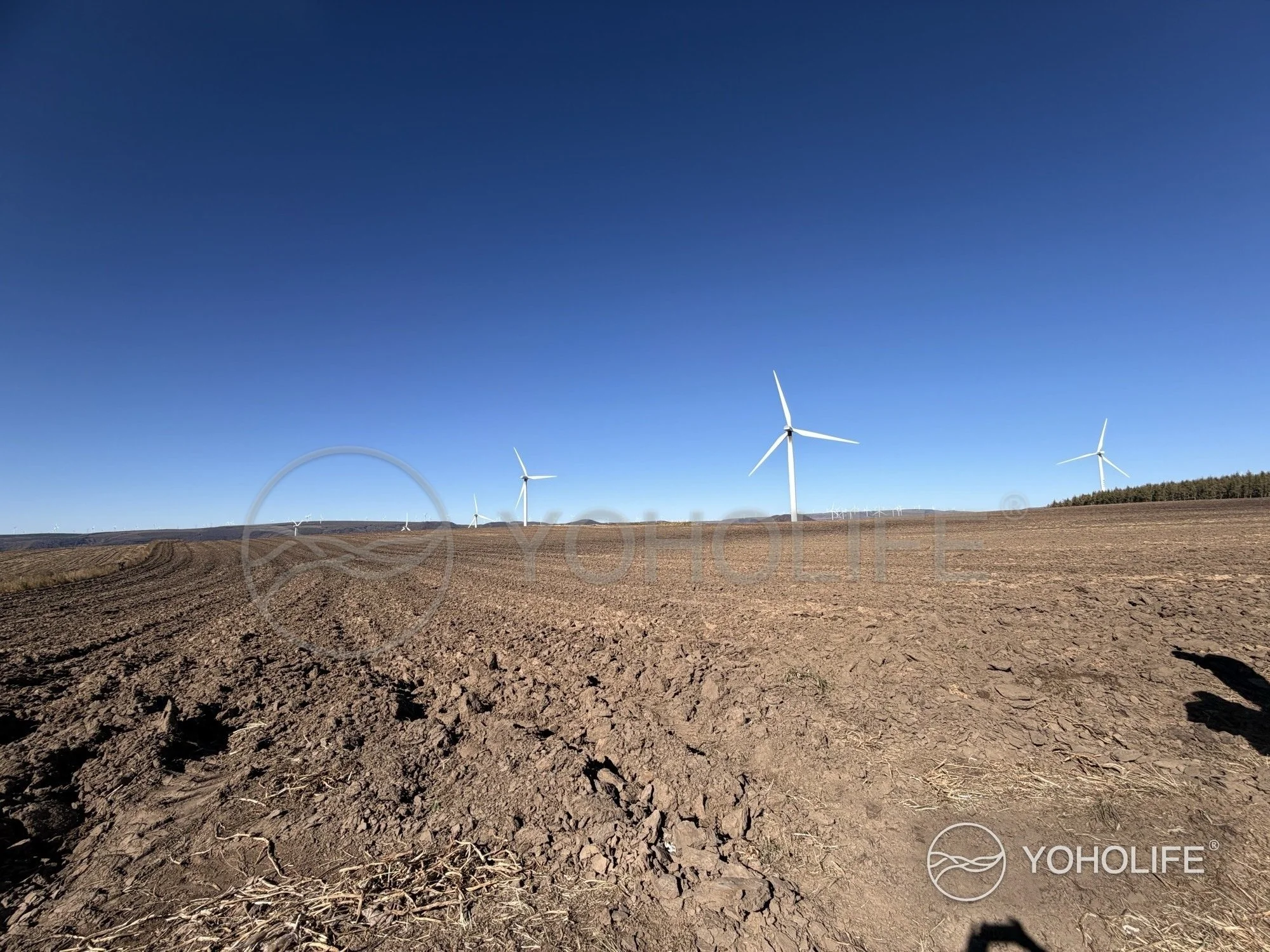
At around 1,600 metres, this growing site is exposed to wind and cold. Our cultivation partner describes a plant able to endure these conditions, including the winter snow, but with particular needs beneath the surface.
Rhodiola here is planted in sandy, well-drained soil. Water must be able to move through it. A plant's resilience to cold does not mean it can thrive in waterlogged ground.
The contrast stays with us: the nursery offers shelter; the field asks the plant to establish itself in a very different setting. Neither stage can stand in for the other.
Following transplantation, the roots grow in the field for approximately three more years before harvest, according to our partner's process. That is a long interval between preparing a young plant and preparing a raw material. It gives a different meaning to the word “supply”. Before an ingredient can be supplied, a living thing must be allowed to grow.
Following an ingredient to its source brings botanical identity, cultivation, careful preparation and the finished specification into one continuous story.
03 / COMMUNITY
Many hands, one long journey
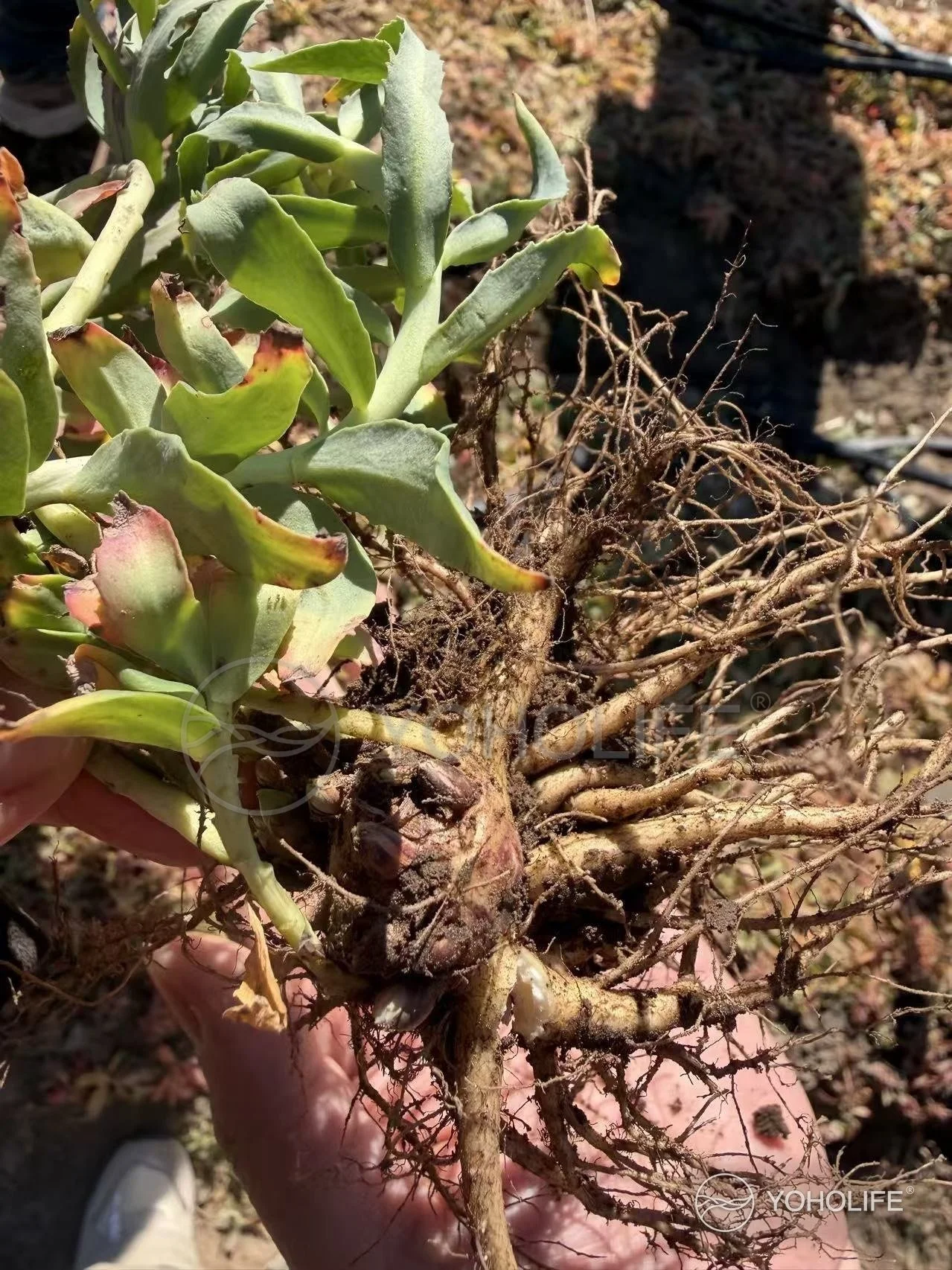
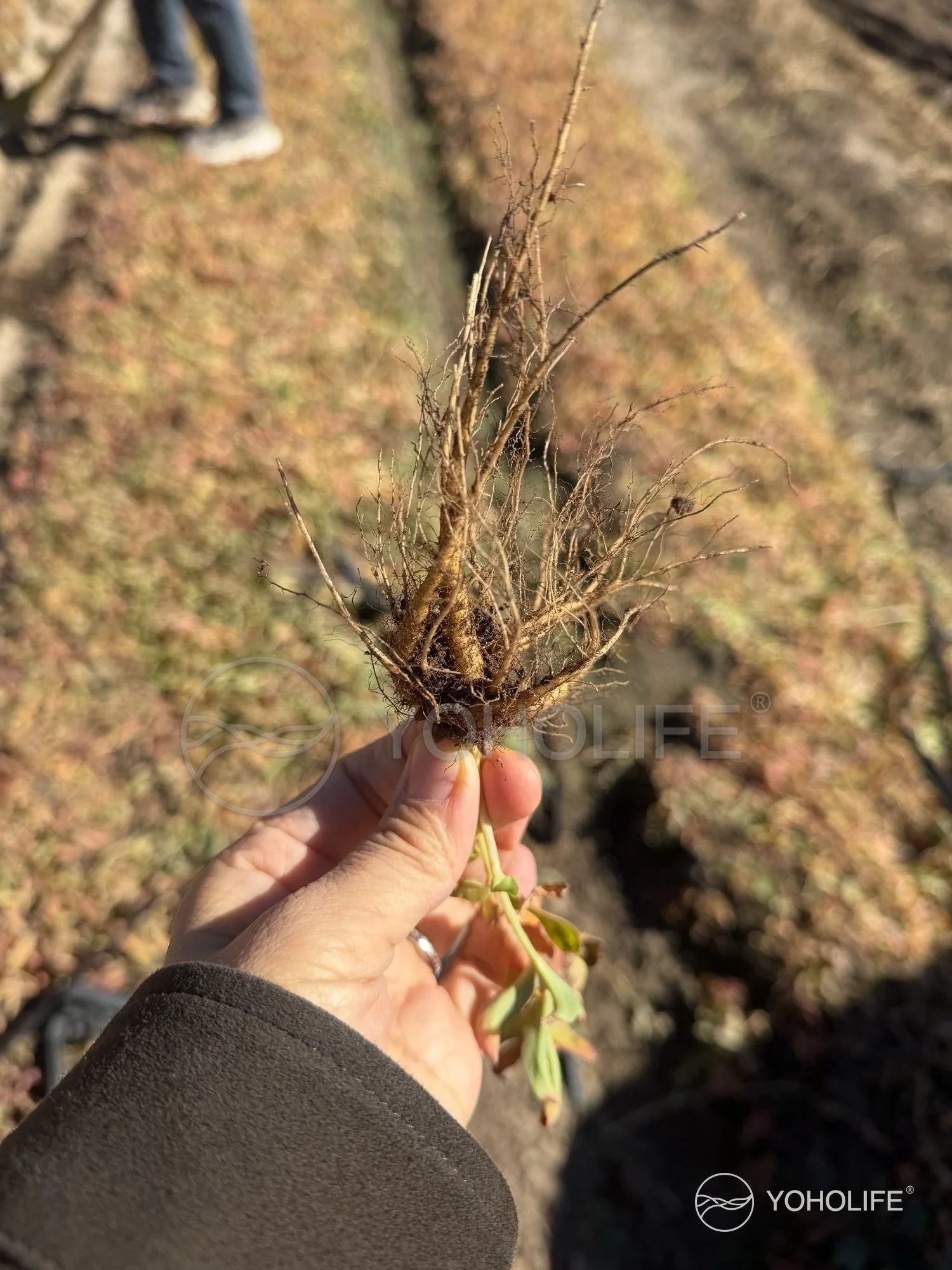
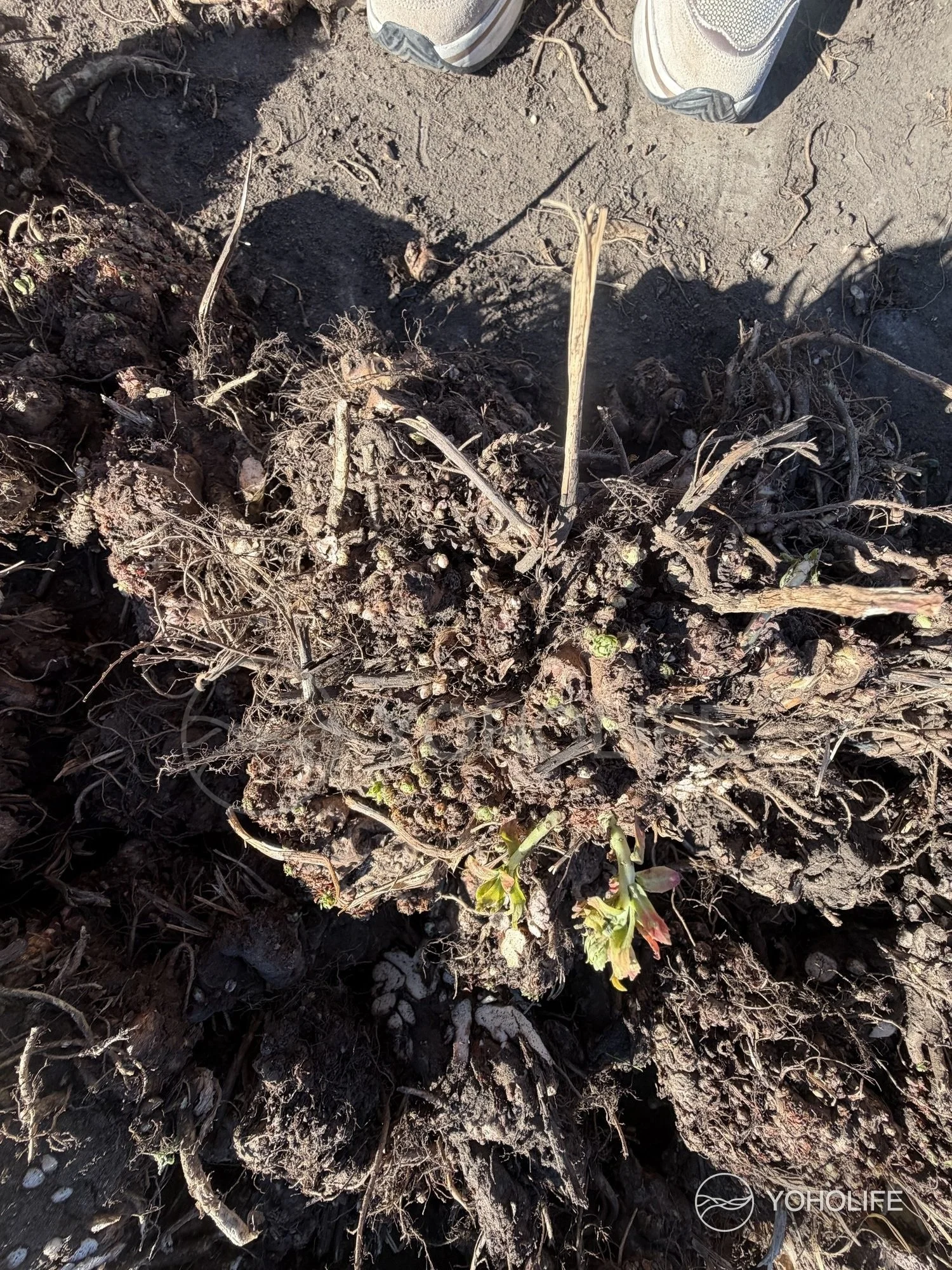
The photographs of roots make their complexity visible: thickened sections, fine branching fibres, soil still held between them. What may later be described in a product document as “root extract” begins as something intricate and alive.
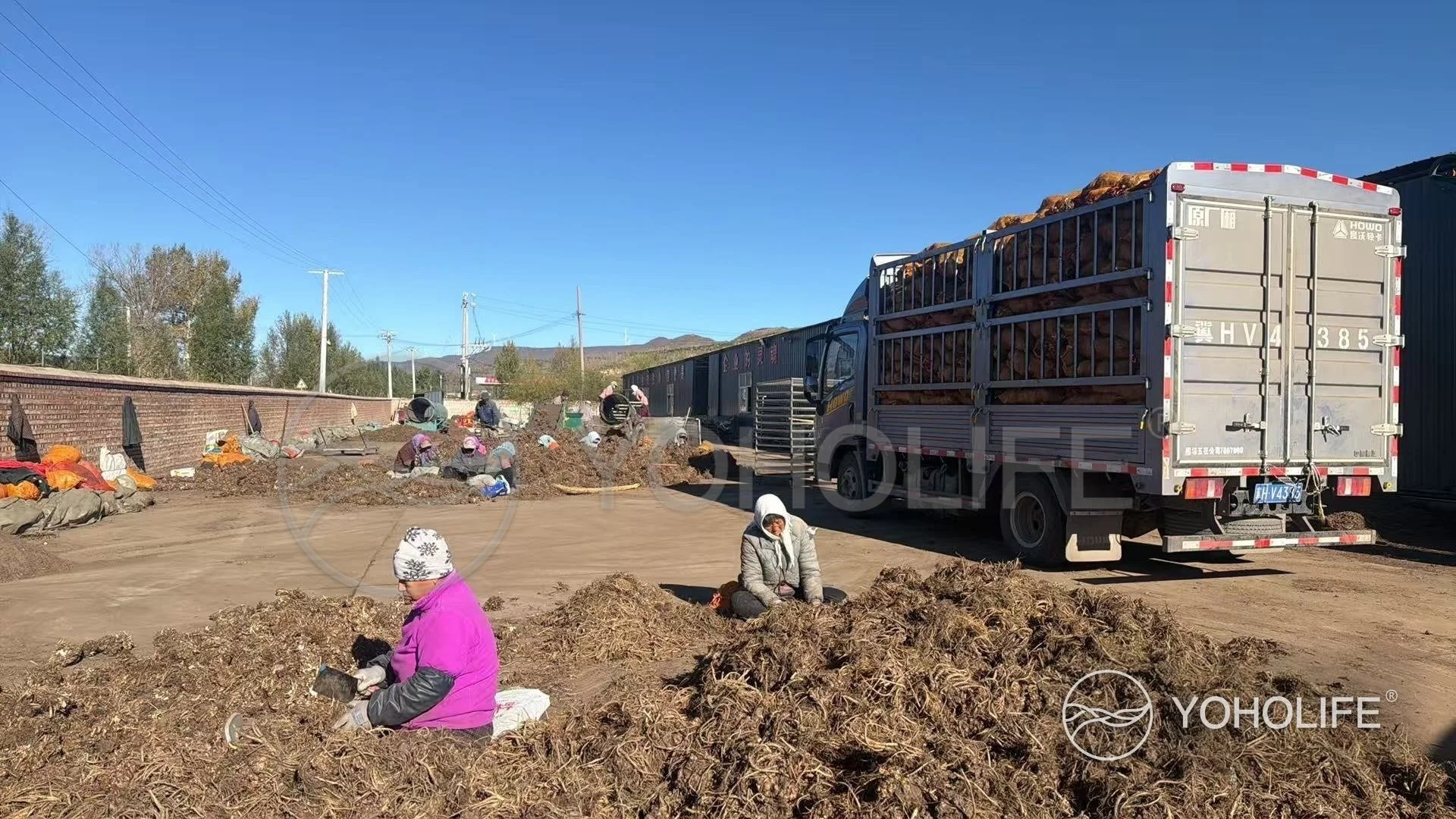
Our cultivation partner organises local residents to take part in growing and post-harvest work. For people with limited employment opportunities close to home, this creates another way to earn income through the place where they live.
Our partner reports that its local cultivation and processing programme involves more than 50 local growers and workers, with average additional annual income of approximately RMB 11,000 per person and a collective annual income increase exceeding RMB 500,000.
Alongside these figures, we want the people themselves to remain visible: the growers who tend the plants and the residents who carefully prepare each harvest. Their work is part of the ingredient's value.
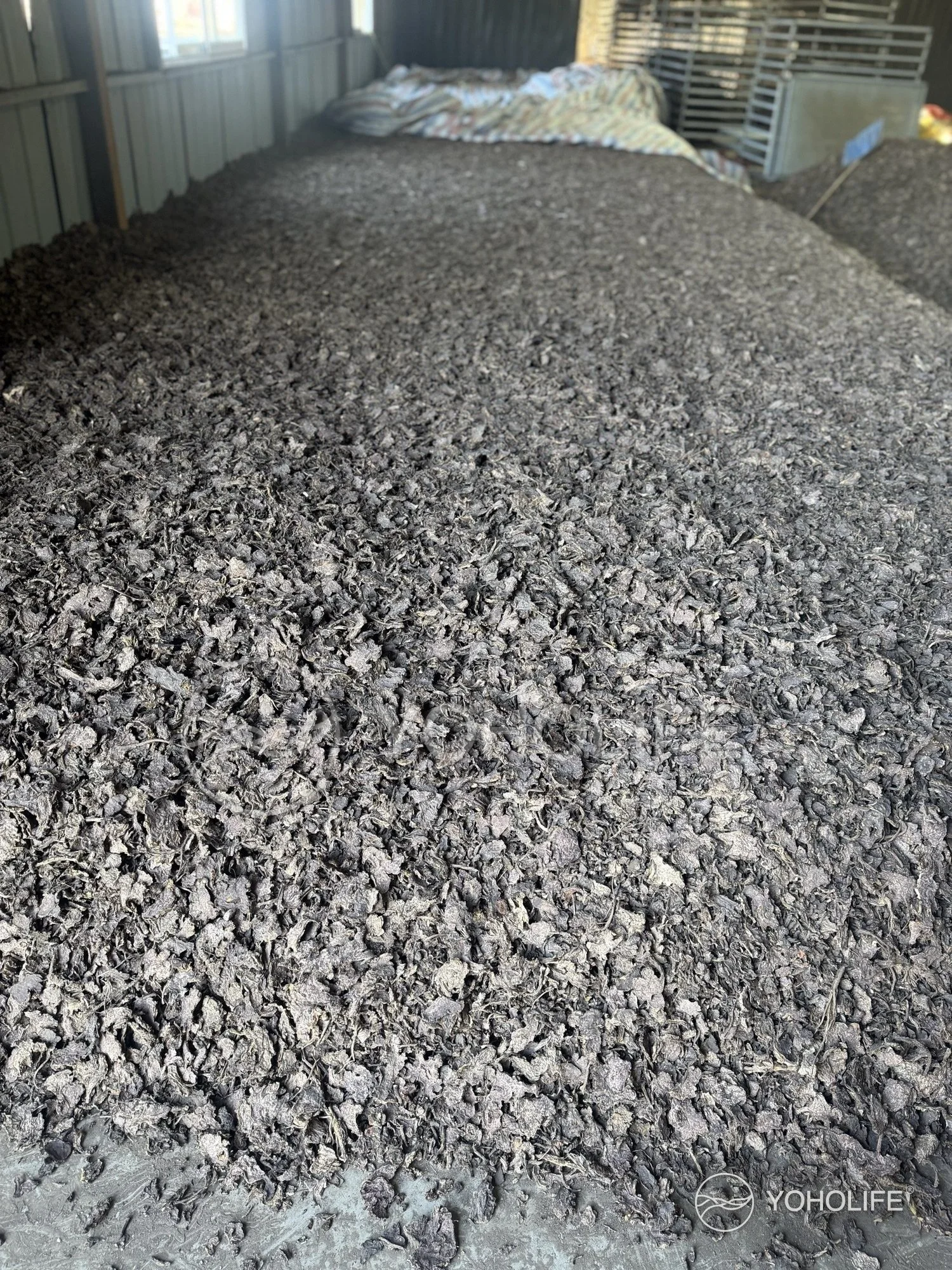
After harvest comes further work. Roots are selected, cleaned, sliced, dried and stored as part of their preparation for extraction. Each stage asks for attention. The raw material passes through many hands before it reaches the form in which our customers know it.
04 / FROM ROOT TO INGREDIENT
The plant behind the specification
After the roots are selected, cleaned and dried, their journey continues towards a defined ingredient. The language changes from growing seasons to analytical markers, but the plant remains the beginning of the story.
Rhodiola is a genus. One of its best-known species, Rhodiola rosea, is a succulent perennial native to subarctic and subalpine regions of the Northern Hemisphere. Its roots and rhizomes are used in extracts studied in relation to stress-related fatigue and attention. Human studies have reported promising findings for particular preparations; understanding them means keeping the extract, dose and study design in view. Kew botanical record Human extract study
Reading the 3% / 1% specification
A conventional specification for Rhodiola rosea extract is 3% total rosavins and 1% salidroside. “Total rosavins” refers to the combined content of rosavin, rosarin and rosin, a group of related phenylpropanoid glycosides. Salidroside is a separate constituent, a phenylethanoid glycoside. Together, these markers help describe the composition of an extract and support quality assessment. Composition study Commercial preparation study
Two constituents, different research questions
Rosavin, one of the three rosavins, has been investigated in biochemical and cultured-cell research on oxidative stress. A recent study explored its behaviour in hydrogen-peroxide-associated cellular stress. This is laboratory evidence about a possible mechanism under investigation; a benefit in people remains to be established. Laboratory rosavin study
Salidroside has also attracted research interest. A small, short exploratory human trial studied pure biosynthetic salidroside in relation to exercise performance and oxygen utilisation. Some findings were encouraging. The specific preparation and exploratory design are essential to interpreting those results and their relevance to a whole botanical extract. Exploratory salidroside trial
A clear marker specification therefore sits alongside botanical identity, the extraction process and the wider composition of the ingredient. Matching percentages alone does not make different preparations clinically interchangeable. For a supplier, precision means helping these details travel with the material. Extract profiling study
Finding a grade for your project
YOHOLIFE® offers reference specification ranges of 0.5%–6% rosavins and 0.5%–98% salidroside. Share the combination you need—including a 3% total rosavins / 1% salidroside specification—and our team can review feasibility, grade and quantity with your quotation.
Behind each number are the plants, years of cultivation and hands that made it possible. Knowing the specification brings us back to the responsibility we carry towards their source.
05 / GIVING BACK
What giving back means, in practice
By the end of our visit, “giving back” had become tangible: another generation of plants in the nursery, work that brings income closer to home, and a cultivated path towards the ingredients we need.
For the land: the next generation
YOHOLIFE® works with specialist partners on clonal propagation and managed planting so that a harvest is followed by another beginning. While mature roots move towards extraction, young plantlets are being raised for future growing seasons. Our contribution begins here: helping replenish the cultivated source, giving each plant the time it needs, and treating a living resource as something to renew.
For nature: a cultivated alternative
Developing a replenishable cultivated supply is how we aim to reduce dependence on wild harvesting. The purpose is to ease pressure on plants in their natural habitats and support the biodiversity around them. Our ambition is to meet demand through planned cultivation while helping protect the wild populations and landscapes from which these botanicals originate.
For people: value that returns to the source
Growing, selecting, cleaning, slicing and drying create work close to home. Our partner reports that its local cultivation and processing programme involves more than 50 growers and workers, with approximately RMB 11,000 in average additional annual income per person and more than RMB 500,000 collectively each year. These figures describe the partner’s wider local programme. Through our participation in this partnership, we support a supply model in which the people tending and preparing a botanical share in the value it creates.
For YOHOLIFE®, these choices connect research, sourcing and a wider purpose. Propagation supports future planting; cultivation creates opportunities for local people; careful preparation honours the years held within each root. Giving back means carrying these responsibilities into the next growing season, so the journey of an ingredient leaves new growth and local opportunity behind.
We came to Hebei to follow a root back to its beginning. We left with a clearer measure of responsibility: what can grow after the harvest, and what the people behind it gain along the way.
What we take becomes an ingredient. What we give back helps the next beginning take root.
Visit details were supplied by YOHOLIFE®. Cultivation details and income estimates are reported by our cultivation partner. Income figures refer to the partner's local cultivation and processing programme.
Nursery and field films
Two nursery clips and our field film follow the cultivation journey from propagation jars to growing plantlets and the field. These three silent views keep the care behind the ingredient in sight.
Rhodiola cultivation beds at our partner growing base in Hebei. Field footage supplied by YOHOLIFE®.
Inside the propagation room: Rhodiola plantlets growing in vessels with our specialist partners in China. Silent footage supplied by YOHOLIFE®.
From vessels to nursery trays: young Rhodiola plantlets under managed cultivation, before their later move to the field. Silent footage supplied by YOHOLIFE®.
