
Green coffee bean extract is specified by its chlorogenic acids, the main phenolic compounds of the unroasted coffee bean. Caffeine, which the bean also contains, is supplied as a single purified compound. When caffeine is plant-derived, the plant it comes from belongs on the specification.
A buyer sees two figures on the specifications of these ingredients: a percentage of total chlorogenic acids on a green coffee bean extract, and a purity of at least 98% on caffeine. This article explains what the chlorogenic acid figure counts, why the caffeine purity figure cannot show where the caffeine comes from, which plants supply caffeine, and why the plant source belongs in an enquiry.
It draws on a review of the phenolic compounds of coffee, a study of 42 conilon coffee genotypes over three crops, two monographs of a World Health Organization agency on the composition of coffee and on caffeine, a review of caffeoylquinic acids, a European Medicines Agency report on green tea leaf, and two studies of natural and synthetic caffeine. Our earlier articles covered the specification as a whole and why two assay methods can give different figures.
01 / THE BEAN
Why does the extract start from the green bean?
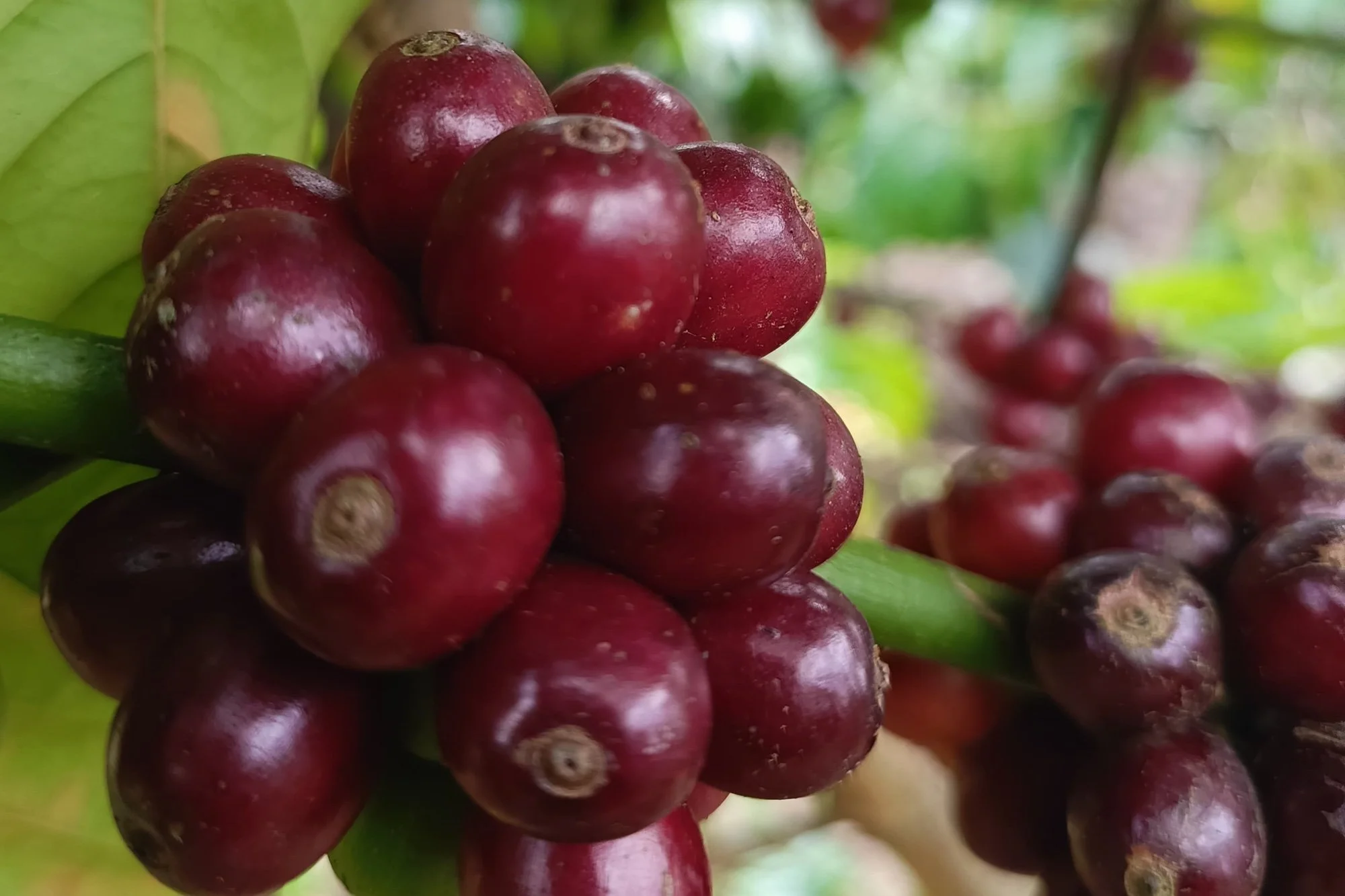
The coffee bean is the seed of the coffee fruit. In the seed, a review of coffee phenolics explains, the phenolic compounds are mostly esters of hydroxycinnamic acids with quinic acid, “collectively known as chlorogenic acids (CGA)”.1
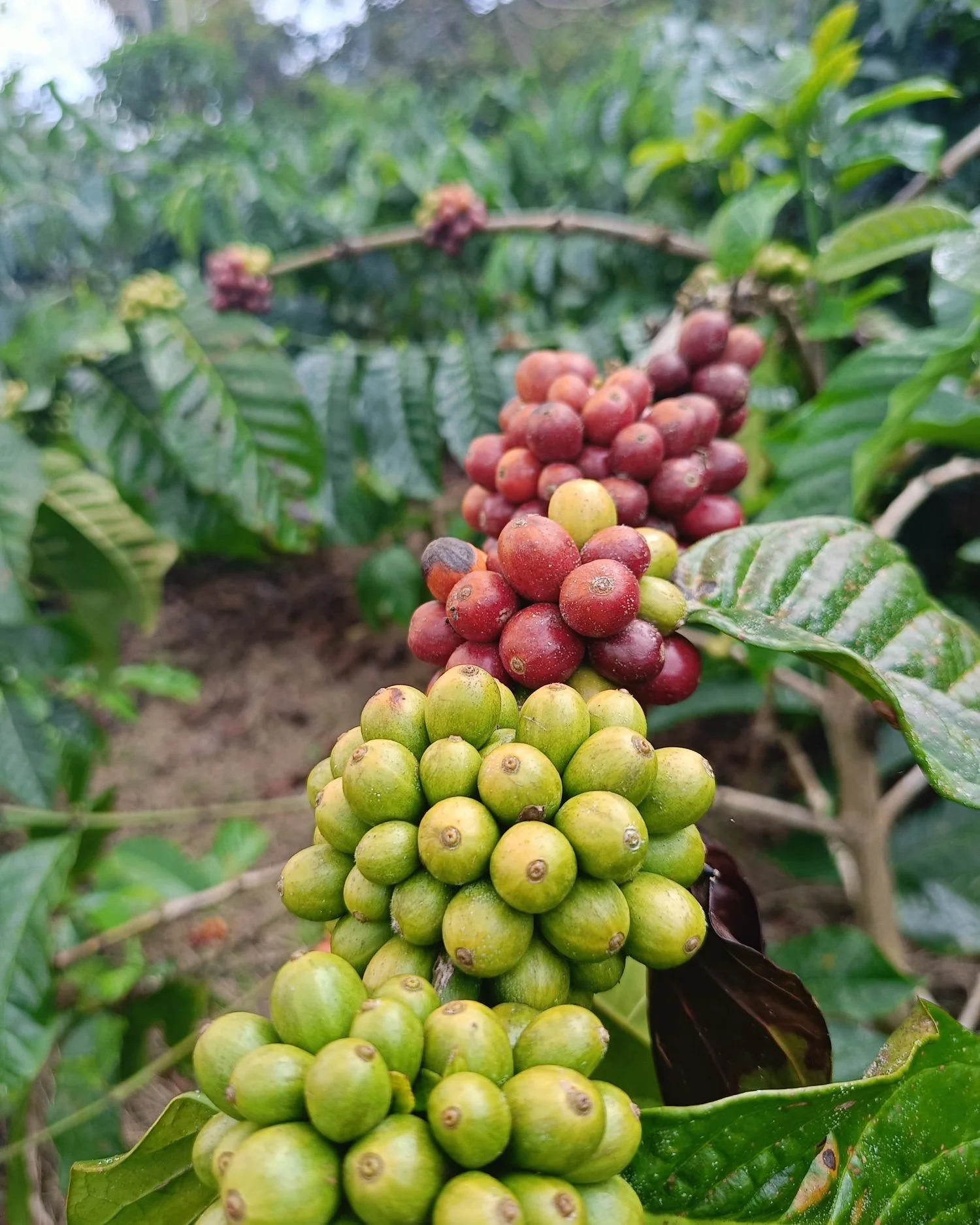
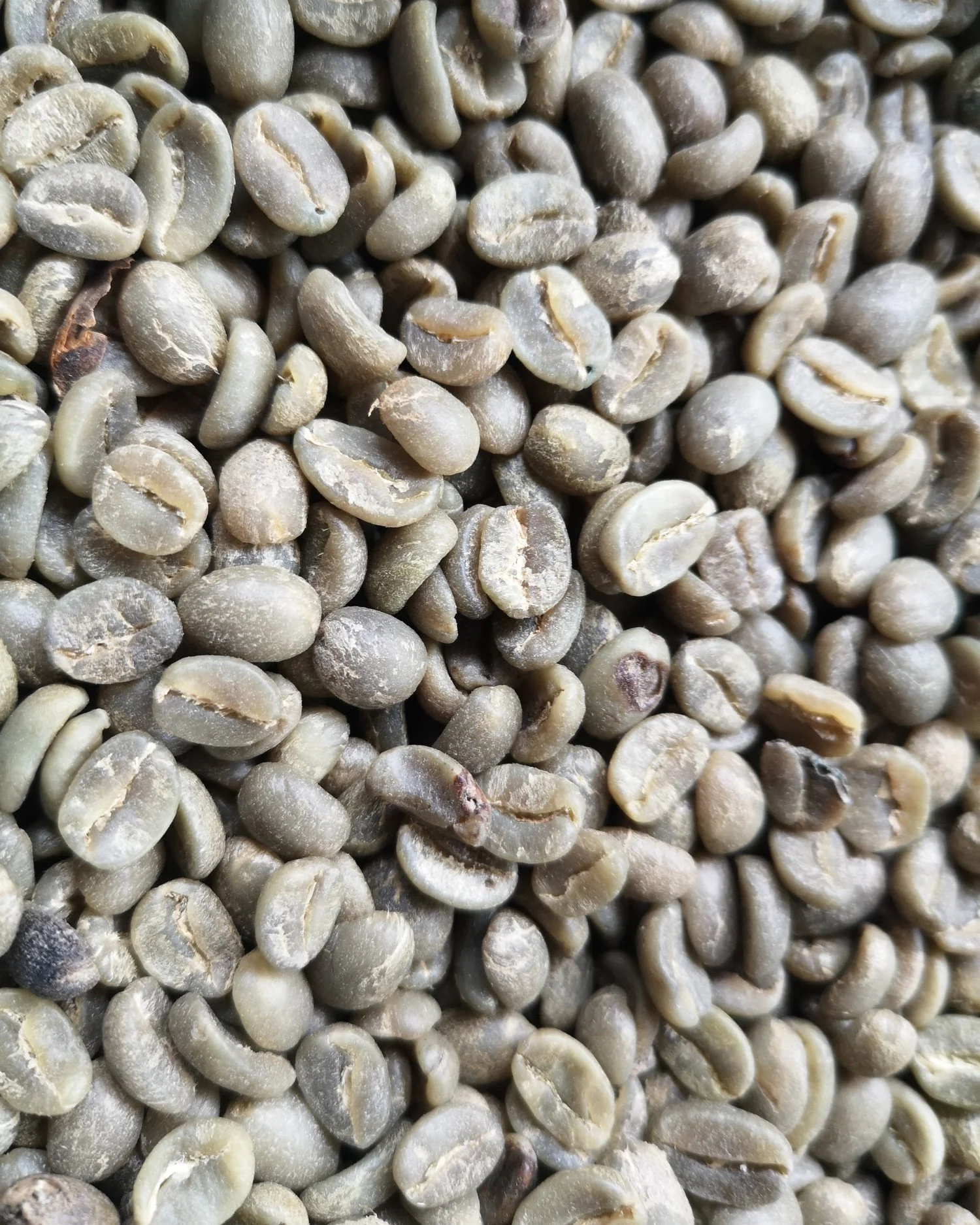
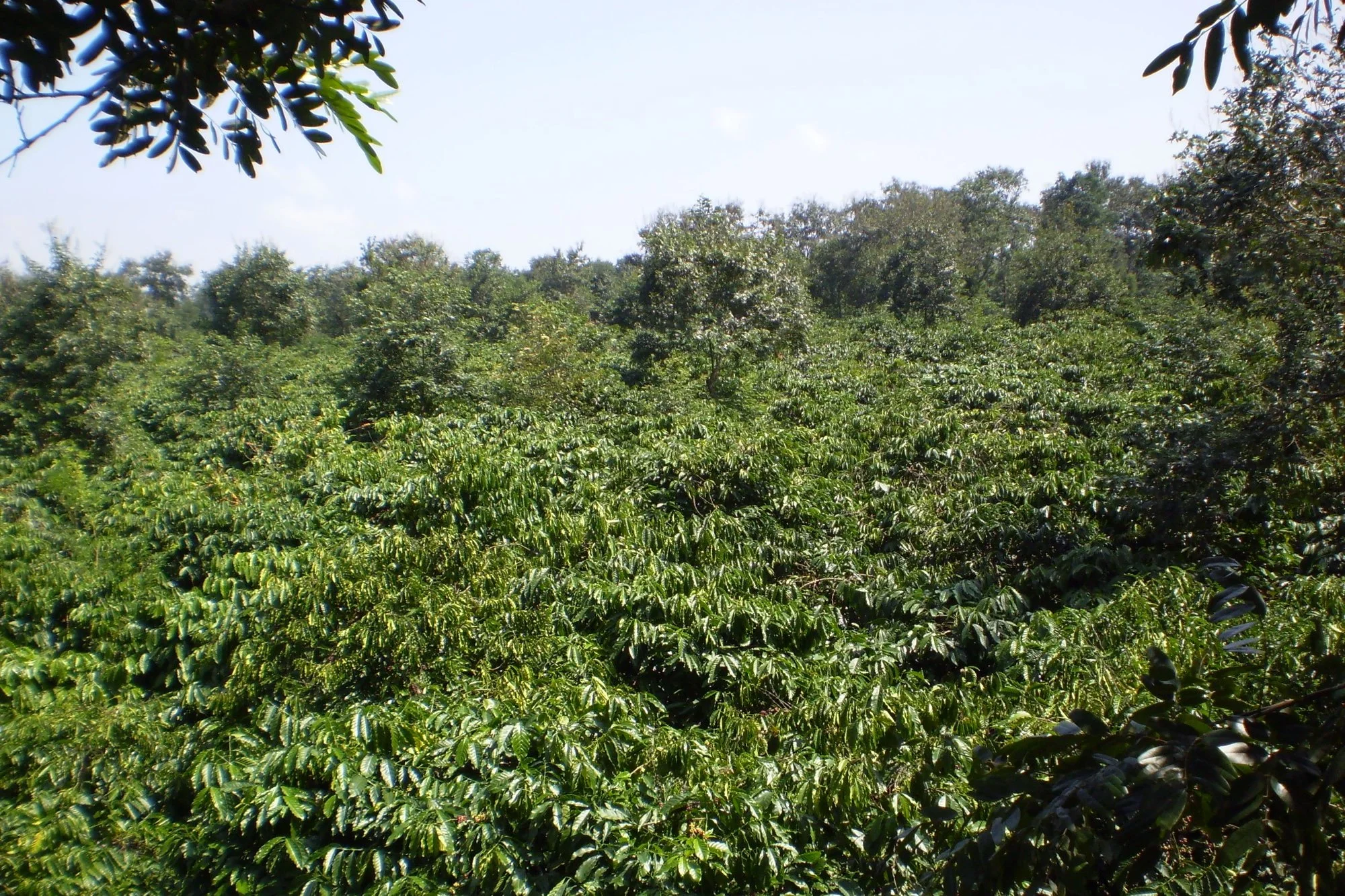
Of the many coffee species, two are cultivated across the tropics for the market, Coffea arabica and Coffea canephora; the second is sold mainly as its robusta and conilon cultivars.2 They differ in chlorogenic acids. For the total in green beans, the review gives literature values, in per cent of dry matter, of 4 to 8.4 for Coffea arabica and 7 to 14.4 for Coffea canephora.1 A monograph on coffee gives typical averages, in per cent on a dry basis, of 6.5 for arabica and 10.0 for robusta.3
Roasting lowers the chlorogenic acid content, and under intense roasting conditions, the review notes, chlorogenic acids “may be almost completely degraded”.1 So the raw material of the extract is the green, unroasted bean.
Our Green Coffee Bean Extract is made from the green, unroasted beans of robusta coffee (Coffea canephora).
Check: the species, and that the beans are green and unroasted.
02 / THE FIGURE
What does “total chlorogenic acids” count?
Chlorogenic acids are a family, not one compound. Each is quinic acid joined to one to three molecules of a hydroxycinnamic acid; in coffee the most common is caffeic acid, followed by ferulic acid and p-coumaric acid.1
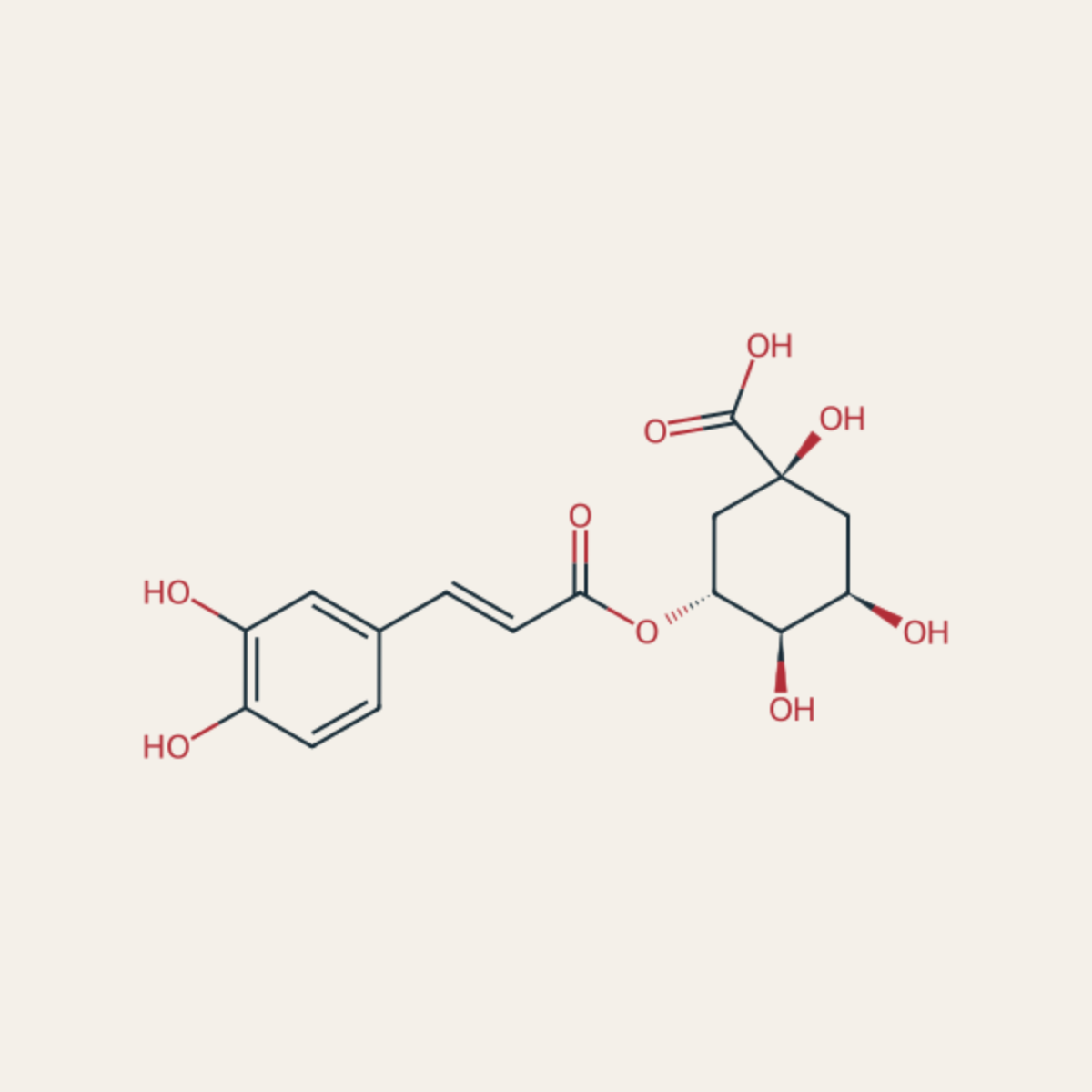
The main groups are the caffeoylquinic acids (CQA), the dicaffeoylquinic acids (diCQA) and the feruloylquinic acids (FQA), each with three isomers. Of the nine main isomers in green beans, by the IUPAC numbering the review uses, “5-CQA alone is responsible for about 56-62 % of total CGA”.1
A total is therefore a sum, and it matters which compounds are added up. In a study of 42 selected conilon coffee genotypes, sampled over three consecutive crops, the chlorogenic acids were measured one by one: eight in the seeds, husks and leaves, and a ninth found only in the seeds. The total was the “sum of CQA + FQA + diCQA”, and in the seeds it ran from 3.71 to 9.71 g per 100 g on a dry basis.2
Isomer names need the same care, because not every source numbers the quinic acid ring the same way. A later review of caffeoylquinic acids uses the numbering of the United States National Library of Medicine: its table gives chlorogenic acid as 3-CQA and neochlorogenic acid as 5-CQA, and it names “chlorogenic acid (3-CQA)” as the most abundant caffeoylquinic acid in plants such as Coffea arabica.4 The main isomer of coffee can therefore appear as 5-CQA in one source and as 3-CQA in another. The review notes “prevalent confusion regarding the nomenclature” and, for analytical standards, advises the “use of CAS numbers”.4 When a document names a single isomer, ask for its CAS number as well.
The method matters too. The review notes that there may be “a certain discrepancy” between results obtained by high-resolution chromatographic methods and by less sophisticated ones.1 Our article on assay methods explains why two methods can give different figures for the same extract.
Our catalogue lists Green Coffee Bean Extract with a specification range of total chlorogenic acids 1%–50%; the featured grade is 50% total chlorogenic acids with caffeine below 2%.
Check: the chlorogenic acid level you need, that it is a total and of which compounds, and the method your quality team uses for it.
03 / THE CAFFEINE IN THE BEAN
How much caffeine comes with the bean?
The green bean also contains caffeine. Determinations of caffeine in green coffees, the monograph on coffee reports, average 1.2% on a dry basis for arabica coffee, with a commercial range of 0.9 to 1.4%, and 2.2% for robusta coffee, with a commercial range of 1.5 to 2.6%.3
The bean figures do not say how much caffeine an extract carries, so a specification for the extract should state caffeine as well as chlorogenic acids. Our featured grade states both: 50% total chlorogenic acids with caffeine below 2%.
Check: the caffeine limit your product needs, beside the chlorogenic acid level.
04 / THE MOLECULE
Where does caffeine as an ingredient come from?
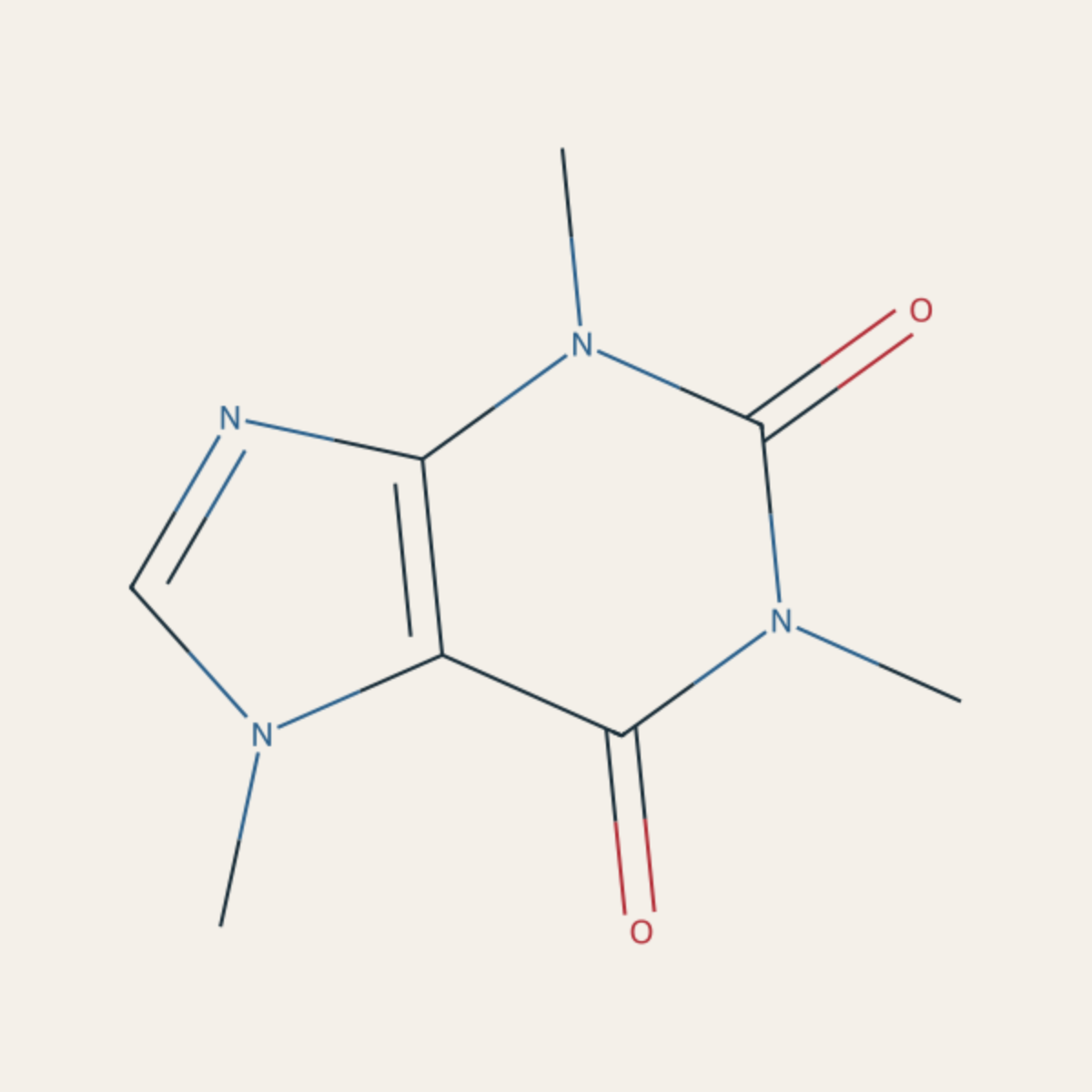
Caffeine is one defined compound: 1,3,7-trimethylxanthine, with the formula C8H10N4O2 and the CAS number 58-08-2.5
It is found in more than one plant. Besides the coffee bean, green tea leaf contains it: a European Medicines Agency report lists “caffeine (2.5 to 4.2%)” among the constituents of the dried leaf.6
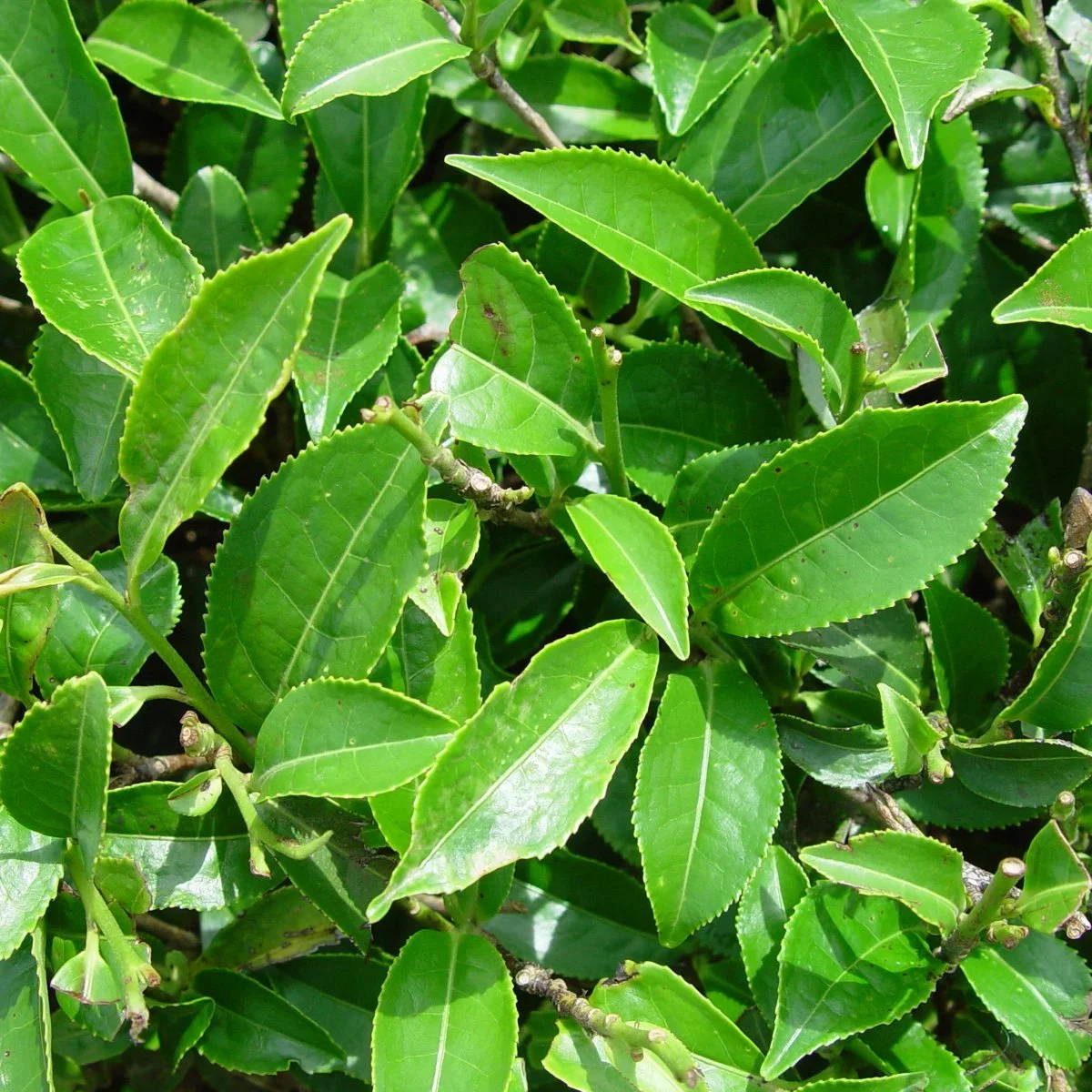
A 1991 monograph on caffeine names two ways of making it: “Caffeine is produced commercially by both extraction and synthetic procedures.”7 The extraction procedures it lists include the decaffeination of green coffee beans with solvents and extraction from tea dusts, wastes and fragments of tea leaves.7
The molecule is the same whichever way it is made. A 2026 study of guaraná states it in passing: “natural and synthetic caffeine are chemically identical molecules”.8 A purity figure therefore cannot show where the caffeine comes from.
Telling natural from synthetic caffeine takes laboratory analysis. The guaraná study names “stable isotope ratio analysis” as a method able to tell natural from synthetic sources.8 A study that measured carbon isotope values in 42 natural caffeine samples, from coffee beans, tea leaves, guaraná powder and maté leaves, and in 20 synthetic ones found “two distinguishable groups”, one for natural caffeine and one for synthetic.9 That study separates natural from synthetic caffeine; its abstract does not say that the method tells one plant from another.
Our Caffeine is a single defined molecule, supplied at ≥98% purity by HPLC. For plant-derived caffeine we offer two named plant sources, green coffee bean and green tea leaf, and the specification states which one a batch comes from. The product page lists the other source routes we quote.
Check: the plant source you need, green coffee bean or green tea leaf, and the document that states it.
WHAT TO SEND
State your requirements with your enquiry
If these points matter for your product, tell us:
- the ingredient: Green Coffee Bean Extract, Caffeine, or both;
- for the extract, the total chlorogenic acid level and the caffeine limit you need;
- the assay method your quality team uses for chlorogenic acids, and whether the specification should name the compounds summed and the basis (as is or dry);
- for caffeine, the source you require (for plant-derived caffeine: green coffee bean or green tea leaf);
- your intended application and destination market;
- which technical documents you need, such as a specification sheet or Certificate of Analysis;
- the quantity, and your name, company and contact details.
We offer technical documentation and COA support, and the available document set is confirmed for each ingredient and project. Specification ranges in our catalogue are references, and feasibility, availability and price are confirmed with your quotation.
This article describes published reviews, monographs and studies. The figures it gives for YOHOLIFE® ingredients are those of their product pages, and the specification and documents for a selected grade are confirmed when you enquire. Sources 3 and 7 are monographs printed in 1991; source 4 was read as the author manuscript and source 9 as an abstract. The photographs are from Wikimedia Commons and are credited under each picture; they show the plants and places named in their captions, not YOHOLIFE® sources.


